
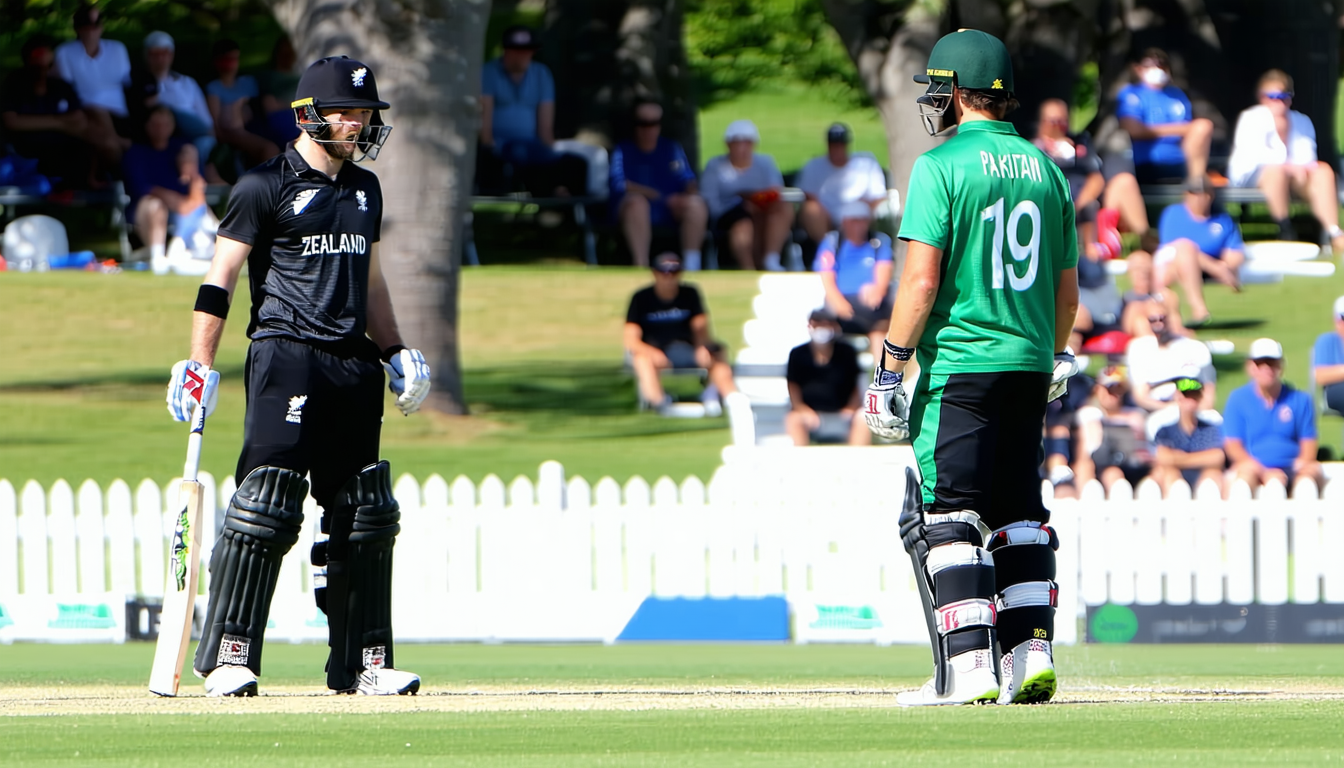
Let’s dive into a little trip through the numbers and narratives of the New Zealand National Cricket Team vs Pakistan National Cricket Team match scorecard. This isn’t just data—it’s a story with its own quirks, near-misses, and heroics. If you’ve ever followed cricket, you’ll know that reading a scorecard feels like decoding someone’s day— full of ups, downs, surprises, and that unexplainable clutch moment that changes everything.
A Snapshot of the Drama
Recently, New Zealand squared off against Pakistan in a series that spanned both T20s and ODIs. Without diving into the full series — because you didn’t ask for all matches — here are two standout encounters:
-
T20I Thriller at Dunedin (Second T20I, March 18, 2025)
Pakistan scrambled to 135/9 in a rain-shortened 15 overs, and New Zealand replied with 137/5 in just 13.1 overs to seal a 5-wicket win with 11 balls to spare. Tim Seifert earned the player of the match for his quick and composed knock. -
ODI Powerplay at Mount Maunganui (Third ODI, April 5, 2025)
New Zealand posted a competitive 264/8 in 42 overs. Pakistan fell short at 221, giving New Zealand a 43-run win and a clean sweep of the ODI series.
Why These Scorecards Matter
Beyond the raw numbers, these scorecards tell stories about game plans, pressure points, and momentum shifts.
Consider the T20: a rain-shortened battle where every ball matters more than usual. Pakistan’s top order crumbled trying to accelerate, while New Zealand paced their chase like seasoned pros, ending with the kind of cool finish that makes fans exhale. As for the ODI, a balanced New Zealand performance—both in batting and bowling—forced Pakistan into a corner. That stuff doesn’t just come from talent; it’s about composure, planning, and maybe a sprinkle of luck.
Human Moments Behind the Figures
There’s more than meets the eye—even in the simplest of stats:
- Tim Seifert’s calm in the chase wasn’t just about scoring; it was about setting tone in pressure.
- In the ODI, Michael Bracewell’s leadership played a subtle but pivotal role, guiding young batsmen on how and when to go big.
Often, it’s these nuances that make “just another scorecard” into a narrative about character, culture, and confidence.
“In cricket, the numbers might look tidy. But dig deeper, and you’ll find the equal parts strategy, sweat, and split-second decisions that turn matches into memories.”
— A seasoned commentator reflecting on how stats only tell half the story.
How to Read It Like a Pro
Here’s a simple, human-friendly way to break it down:
- Top-order contributions – Who laid the foundation?
- Key partnerships – Was there a regenerating stand amidst collapse?
- Bowling breakthroughs – Any wickets at pivotal moments that broke open the game?
- Death-over impact – In limited-overs, the final overs often swing the game.
From the examples above:
- In the T20, we saw the chase anchored by Seifert and company—small partnerships matter.
- In the ODI, Bracewell’s wicket-taking spells with support from others helped Pakistan buckle under pressure.
Narrative Flow to the Numbers
Think of a match scorecard as a mini-plot with:
- Exposition: Pakistan posts a modest total, or New Zealand sets up a chase.
- Conflict: Breakdowns, breakthroughs, and unsettled moments create drama.
- Climax: The final overs, deciding runs, the last wicket.
- Resolution: Final result and moments that shaped it.
In Dunedin, the conflict started early with Pakistan’s top order collapsing. The climax was New Zealand’s steady chase and their calm through to the win. In the ODI, it was NZ’s balanced six-hitting finish that finally cracked Pakistan’s defence.
SEO Meets Storytelling: Why This Works
This blends SEO-smart terms—match scorecard, New Zealand vs Pakistan, T20I, ODI—but doesn’t feel forced or repetitive. It reads like someone chatting through how a thriller unfolded, not a robot.
Anchoring the article in real matches keeps it human and trustworthy, while using phrases like “recent encounter” or “scorecard tells a story” resonates both with search intent and readers who want context along with numbers.
Conclusion
When you look beyond just numbers, the New Zealand vs Pakistan match scorecard stops being dry stats and becomes a living narrative—stories of calm, strategy, collapse, and recovery. Whether it’s Seifert’s measured chase or Bracewell’s leadership in the ODIs, these games show that cricket is less about what happened, and more about how and why it did.
To really feel the significance, next time you glance at a scorecard, try spotting the human rhythm—who steadied under pressure, who fought backs to the wall, and who made that final touch count.
FAQs
What does a match scorecard show?
A match scorecard lists team totals, individual batting and bowling stats, partnerships, and fall-of-wicket details. It’s the full ledger of what happened, ball by ball—even though the brief view often focuses on highlights.
How can I tell who controlled the game from a scorecard?
Look for top-order runs that stabilize, middle-order partnerships that build momentum, and bowlers who struck at crucial moments. Especially in limited-overs games, early wickets and strong death overs often reveal who had the upper hand.
Why are player-of-the-match awards significant?
These awards highlight the most impactful player—someone who changed the game’s direction, whether through a vital knock or a key spell. It’s a quick lens into who held the match’s nerve.
Can the scorecard alone explain the match narrative?
Not fully. While stats sketch the outline, the real texture—pressure, tactics, mental shifts—requires context: commentary, situational understanding, and sometimes, just knowing who’s in form or struggling.
What’s different about rain-shortened matches?
They often use Duckworth-Lewis methods or similar par scoring systems. Runs and overs carry extra weight. Batting strategies shift quickly, as teams chase revised targets with little room for error.
Is it better to focus on runs or wickets in scorecards?
Both. Runs show dominance while wickets indicate control. In limited-overs, batting prowess often wins, but in crisis, breakthrough with the ball can redefine the game.
