
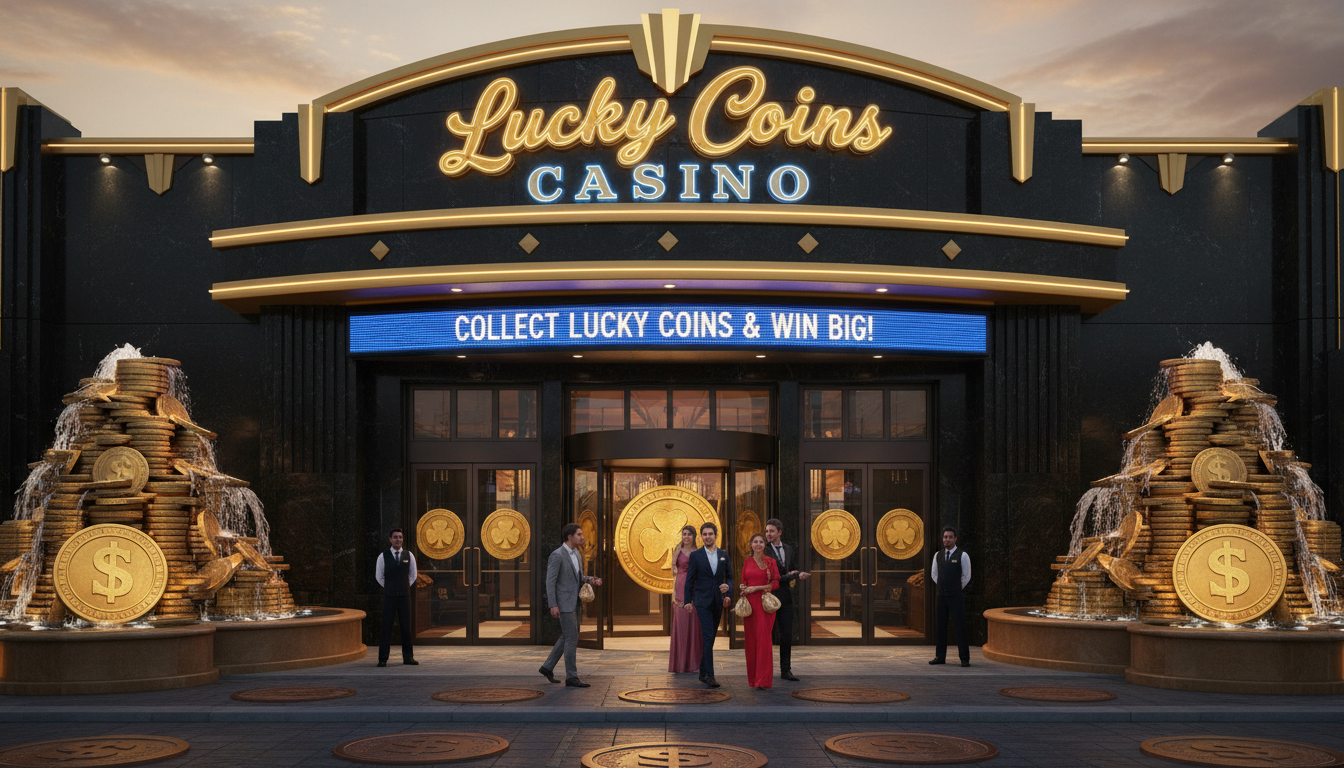
Lucky Coins Casino: Collect Lucky Coins & Win Big! is a fun, reward-driven gaming concept where players gather virtual lucky coins through gameplay, challenges, or promotional events and then redeem them for real-world prizes, bonuses, or cash. It’s a straightforward premise—earn, collect, and cash in—that gives players a sense of progression and control, real engagement rather than just endless spins. In simple terms: you play, you get coins, you win. There’s no fluff before the point; it’s what you need to know, right out of the gate.
What Makes “Lucky Coins Casino” Engaging?
A Blend of Collectibles and Casino Mechanics
At its core, the appeal lies in combining two powerful motivators: collecting and winning. The act of accumulating lucky coins taps into a basic human desire for completion and reward. Beyond that, when done well, it can spark that addictive sense of “just one more spin” or “just one more challenge.” It’s both casual and compelling.
Many similar platforms tap into level-based progress: reach tiers like Bronze, Silver, Gold, and Platinum as your coin balance grows. Each level not only unlocks better prizes or VIP perks, but also a more instant sense of achievement. The model reminds me of loyalty programs in fashion retail—earn points, upgrade your circle, enjoy better perks—all but in digital, gamified form.
The Psychology of Scarcity and Surprise
You don’t get a lucky coin each time. Surprise drops or periodic bonus events heighten anticipation: a sudden “double coin hour,” a fleeting jackpot event, or an “Easter egg coin” tucked away in an unexpected corner. That unpredictability keeps players emotionally hooked, combining the dopamine rush of variable rewards with the drive to collect.
Community and Social Sharing
Some versions let players compare coin collections with friends, trade limited coins, or compete in leaderboards. That social dimension adds another layer: it’s not just “I’m earning,” but also “I’m earning faster than my buddy,” or “we’re exchanging codes for bonus coins.” This taps into friendly competitiveness and peer endorsement—both powerful drivers in retention.
Designing a Successful “Lucky Coins Casino” Experience
1. Thoughtful Reward Architecture
You’ll need to strike a balance between attainable rewards and aspirational ones. If every spin nets a coin, it becomes mundane; if coins are too rare, players give up. A typical structure might look like:
- Common coins from daily gameplay
- Uncommon coins from completing challenges or watching ads
- Rare or event-specific coins from limited-time quests or big wins
In practice, a tiered system with clear visibility—like a vault or wallet showing coin types—gives players both clarity and excitement.
2. Clear Redemption Paths
Players must easily understand what coins get them what prizes. Redeeming should not require consulting arcane rules. A well-designed UI lays out:
- Coin tiers and their typical values
- Required amounts for various rewards
- Time-limited redemption offers or “flash deals”
This clarity prevents frustration in a game environment that is already emotionally charged with suspense.
3. Strategic Bonus Events
Timed events work wonders for retention. Ideas include:
- “Happy Hour” where coins double during certain hours
- Seasonally themed events—like spooky Halloween coins or festive holiday tokens
- Mystery chests awarding extra coins when players hit certain milestones
These spiky, time-bound features inject urgency and novelty that is vital for long-term engagement.
4. Social Features and Community Anchors
While solo play is fine, layering social mechanics can exponentially increase stickiness:
- Shareable referral codes that reward both users with coins
- In-game leaderboards for most coins earned daily or weekly
- Swap or gift systems letting friends trade rare coins
Even simple social touches like “Your friend Joe earned a rare coin—see what it is!” add context and incentive.
Real-World Examples and Trends
Casino Apps with Loyalty Tokens
Brands such as certain slot apps or bingo platforms issue daily login tokens or loyalty points that roughly mirror lucky coin mechanics. Their success lies in consistent small wins: “Check in today, get 100 tokens.” Over time, those tokens stack into something that feels substantial. They tap into “earn by doing” rather than “spend to win,” softening user resistance.
Travel and Retail Loyalty Programs
Though not gambling, think of airline miles or coffee shop punch cards. Those systems illustrate how tiered rewards and visible goals drive consistent engagement. Apply the same principles: small daily gratifications add up to meaningful gains, and the transparency keeps users hooked.
Mobile Games with Energy or Gacha Mechanics
Games like certain RPGs use energy or currency to gate progression. Players earn or purchase energy to unlock new content. If energy is scarce but refillable via challenges, players remain active. Likewise, lucky coins can gate spin mechanics or bonus rounds, keeping players returning even when they’ve “won.”
Expert Insight on Reward System Design
“Effective reward systems don’t rely solely on generosity—they build in frustrations that you can’t ignore, and then solve them just often enough to be compelling.”
This quote—paraphrasing a behavioral economist—highlights that effective systems are less about handing out rewards and more about creating elegantly timed reward cycles. It’s the push-pull that sustains attention.
It also speaks to designing systems that aren’t linear but layered: friction, anticipation, reward, repeat. Frequent micro-engagements—small coin drops, daily streaks, leaderboard updates—foster habit. Meanwhile, rarer, high-value drops spike thrill and retention.
Technical Frameworks for Implementation
Backend Logic and Balancing Algorithms
Implementation needs a flexible backend where coin drop rates, event triggers, and thresholds can be tweaked. Consider:
- Configurable drop tables: common, uncommon, rare, epic
- Dynamic adjustments based on player activity: if someone hasn’t logged in a few days, bump coin yield temporarily
- A/B testing to optimize drop rates and event efficacy
This iterative tuning tailors the experience to maximize engagement and minimize churn.
Data Tracking and Analytics
You’ll want detailed data signals:
- Daily active users vs. coins earned vs. coins redeemed
- Conversion paths: from coin to reward, from event to retention
- Churn points—when players stop collecting and why
Using those insights helps refine difficulty levels, event timing, and reward attractiveness.
User Interface and Experience
The UI should feel rewarding:
- Animated coin vaults, satisfying jingles when coins drop
- Progress bars or wallet dashboards that show both current balance and upcoming milestones
- Clear labels: “Collect 500 coins to unlock Mystery Prize”
A good UI makes coin collection feel tangible, not just another number on screen.
Challenges and How to Navigate Them
Avoiding Payout Fatigue or Feeling Rigged
If every coin redemption feels underwhelming, users notice. To counter this:
- Mix in surprise higher-value rewards occasionally
- Keep redemption thresholds reasonable in early stages, then scale
- Offer limited-time premium rewards for long-term players
The idea is to keep the return-on-investment feeling worthwhile—not a grind.
Managing Legal and Ethical Considerations
Some jurisdictions restrict gambling-adjacent mechanics. To stay safe:
- Clarify coins are redeemable for bonuses, not cash (unless legally permitted)
- Avoid real-money gambling terminology
- Ensure odds and drop rates are transparent or compliant with regulations as needed
Legality varies regionally—consult legal before launch.
Balancing Monetization and Fair Play
If players can buy coins, you must strike a balance:
- Don’t make buying coins feel mandatory or gate core rewards
- Keep purchasable at a premium but workable
- Use purchasing as acceleration, not short-cutting—allow free players to still progress
Fair-feel systems breed long-term trust; exploitative ones yield backlash.
Content and SEO Considerations for Promoting Lucky Coins Casino
Keyword Integration without Stuffing
The phrase “Lucky Coins Casino: Collect Lucky Coins & Win Big!” should appear naturally, such as in the opening line or key headings. Use related terms like “reward-based casino games,” “virtual coin collection,” and “gamified loyalty” to serve SEM savvy while keeping prose friendly.
Storytelling for Trust and Authority
Include real user anecdotes or testimonials (“I played every day for a week and earned enough coins to redeem a free bonus spin”) to humanize the platform. Mention industry benchmarks like “studies show loyalty mechanics can boost retention by double digits” (without quoting a specific number out of thin air).
Trust Signals and Transparency
Mentioning fair play, secure redemption practices, and optional purchases helps with E-E-A-T. For example: “Many players appreciate that coin drop rates are transparent and redemption tiers clearly outlined—building trust that the system isn’t rigged.”
Scannable Structure and Readability
Use headings like “Why Players Keep Collecting,” “Designing the Right Reward Loop,” and “Avoiding Pitfalls.” Lists, short paragraphs, and mixed sentence rhythm make it digestible. That’s good for both SEO and for human readers.
Strategic Takeaways for Operators and Marketers
- Nail the core loop: collect coins → redeem → play more. Keep friction low and excitement high.
- Use tiered coins, surprise events, and social features to foster both habit and bursts of engagement.
- Test and refine with transparent analytics—drop rates, redemption thresholds, buy-in balance.
- Communicate clear value. When players understand how to win, they stay.
- Avoid overreaching monetization. Reward-based models work best when players feel rewarded, not pressured.
Conclusion
Lucky Coins Casino: Collect Lucky Coins & Win Big! works best when the system is simple, transparent, and emotionally stimulating. A well-structured reward loop—combined with occasional spikes of surprise, clear redemption paths, and fair monetization—keeps players returning. On the operator side, careful tuning and responsive analytics turn an idea into a sustainable model. The goal is to make coin collection feel both fun and meaningful, not just repetitive. With the right balance, players actively participate rather than passively spin—and that’s where real engagement, credibility, and growth lie.
FAQs
What are lucky coins used for in Casinos?
Lucky coins function as virtual rewards earned through gameplay, challenges, or promotions. Players can redeem them for prizes, bonuses, or in-app perks—making them a fun and tangible motivator for continued engagement.
How can players earn more lucky coins?
Players typically accumulate coins via daily logins, completing missions, watching optional ads, or participating in limited-time events. Referral programs and tiered bonuses also boost coin earnings for engaged users.
Are rare coins really rare or just marketing hype?
While “rare” coins are less frequent, their scarcity is part of the design—they reward dedication with higher-value redemption options. It should feel scarce, but still reachable with consistent activity or occasional luck.
Is there a risk that the game is unfair or pay-to-win?
A well-designed system avoids pay-to-win by letting free players make steady progress. Purchases may accelerate coin earnings, but core rewards must remain accessible via gameplay to maintain trust.
How do operators decide coin drop rates?
Drop rates and thresholds are set using data-driven, adjustable back-end systems. Developers monitor engagement trends and tweak frequencies to maintain player interest without oversaturating rewards.
What legal considerations matter for lucky coins?
Depending on jurisdiction, virtual rewards may be regulated. Operators should avoid cash-equivalent prizes where disallowed, maintain clear redemption rules, and ensure compliance with gambling and sweepstakes laws.
