
The cryptocurrency market in 2025 offers more wallet options than ever before. Whether you’re new to crypto or have been holding for years, picking the right wallet comes down to understanding how each option handles the trade-off between security and convenience. This guide covers what actually matters when choosing a wallet, without the fluff.
Hot Wallets vs. Cold Wallets
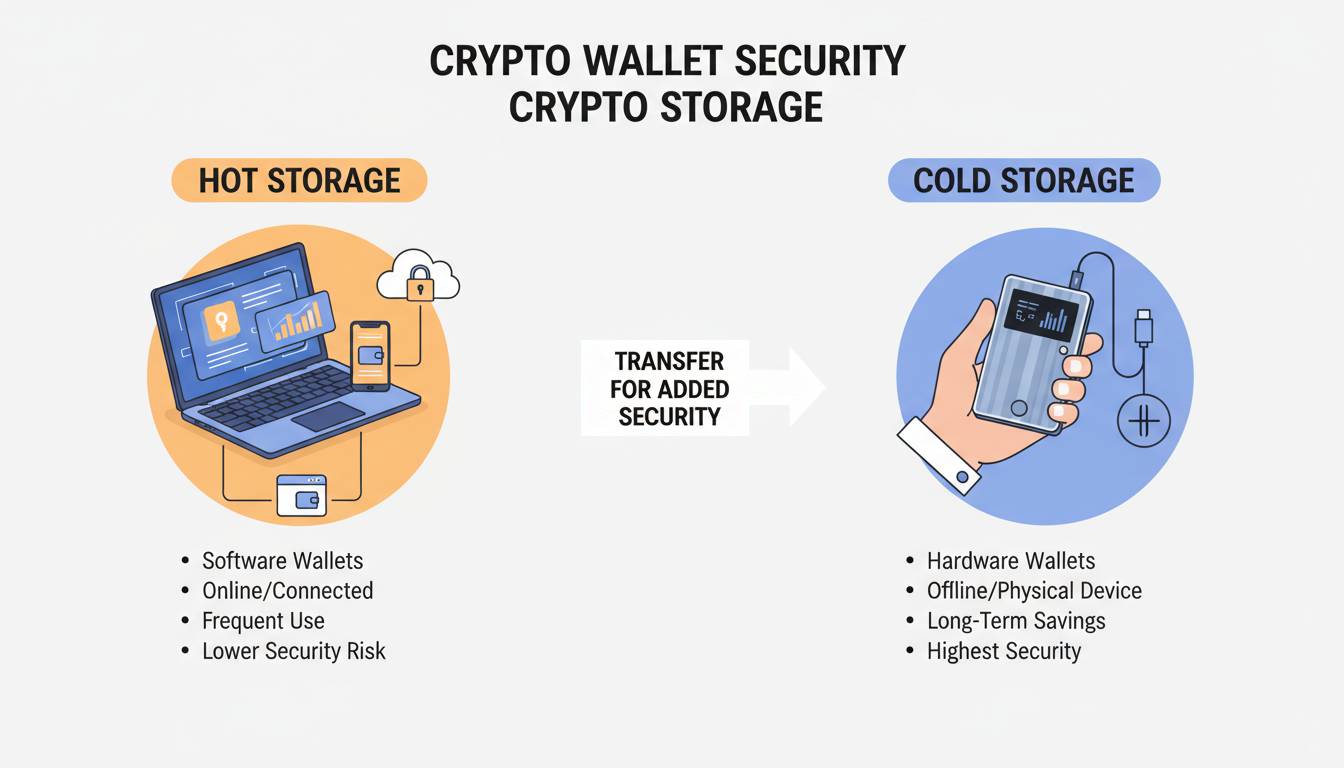
The first decision is whether you want your keys connected to the internet or not.
Hot wallets are apps and browser extensions that stay online. They’re convenient—you can send and receive crypto instantly. The downside is that anything connected to the internet is potentially vulnerable to hackers. If you trade frequently or need quick access to your funds, hot wallets make sense. Popular options include MetaMask, Coinbase Wallet, and Trust Wallet.
Cold wallets keep your private keys offline, usually on a physical device. This makes them much harder to steal remotely, which is why serious holders use them. The tradeoff is slightly slower access and an upfront cost. Ledger and Trezor are the main names here.
Most people end up using both: cold storage for what they’re holding long-term, a hot wallet for trading and spending.
Quick Comparison
| Wallet | Type | Coins | Key Features |
|---|---|---|---|
| Ledger Nano X | Hardware | 5,500+ | Secure element chip, Bluetooth, mobile-friendly |
| Trezor Model T | Hardware | 1,000+ | Touchscreen, Shamir backup, open-source |
| MetaMask | Software | 1,000+ | DeFi integration, browser extension |
| Coinbase Wallet | Mobile | 10,000+ | Easy setup, cloud backup, exchange integration |
| Trust Wallet | Mobile | Many | Mobile-first, simple interface |
Best Overall: Ledger Nano X
The Ledger Nano X hits the sweet spot for most people who take crypto seriously. It stores your private keys on a secure element chip—the same tech used in passports and credit cards—so keys never leave the device. You can connect it to your phone via Bluetooth and manage everything through the Ledger Live app.
It supports over 5,500 cryptocurrencies, which covers just about everything most people would hold. The built-in exchange and staking features mean you don’t need to move funds to other platforms as often.
At around $149, it’s not cheap. But if you’re holding meaningful amounts of crypto, the cost is reasonable insurance.
Best for Beginners: Coinbase Wallet
Coinbase Wallet makes it easy to get started without feeling overwhelmed. The interface is straightforward, and since it’s built by the same people as the Coinbase exchange, moving money between your account and personal wallet is simple.
The cloud backup feature encrypts your recovery phrase and stores it in iCloud or Google Drive. Lose your phone? You can recover your wallet from anywhere. This is genuinely useful, though some security-minded folks prefer keeping backups entirely offline.
It’s free to download, which is nice for people just trying things out.
Best Hardware Wallet: Trezor Model T
If maximum security is your priority, the Trezor Model T is worth considering. The touchscreen display lets you verify transaction details directly on the device—so your computer can’t lie about what you’re signing. It also supports Shamir Backup, which splits your recovery seed into multiple pieces stored in different places.
The trade-off is supporting fewer coins than Ledger (around 1,000), and the price is higher at about $219. But for privacy-conscious users or anyone holding assets they plan to ignore for years, the extra features matter.
Best for DeFi: MetaMask
MetaMask is the go-to for anyone spending time in Ethereum DeFi. With over 30 million users, it’s become the standard way to connect wallets to decentralized apps, NFT marketplaces, and blockchain games.
The browser extension integrates directly with websites—you click to connect, approve transactions, and that’s it. You can also use it with a hardware wallet if you want the convenience of MetaMask with the security of a device.
It primarily supports Ethereum and EVM-compatible chains. If you’re only dealing with Bitcoin or obscure altcoins, you’ll need something else.
How to Pick
Think about these factors:
- How much are you holding? Over a few thousand dollars? Get a hardware wallet. Smaller amounts? A good mobile wallet is fine.
- How often do you need to move funds? Daily trading favors hot wallets. Holding for years? Cold storage.
- What are you actually holding? Most wallets support Bitcoin and Ethereum. Niche coins might not work everywhere.
- Can you handle the setup? Some wallets have steeper learning curves. Be honest about your tech comfort level.
FAQs
Which wallet is best for beginners?
Coinbase Wallet is the most approachable. The setup is simple, the interface is clean, and the cloud backup means you won’t lose access if something happens to your phone.
Are crypto wallets safe?
They use encryption, PINs, and secure chips. Hardware wallets are safer because they stay offline. Nothing is 100% immune to attacks, but using reputable wallets and keeping your recovery phrase safe covers most threat vectors.
Do I need a wallet if I keep crypto on an exchange?
You should at least understand that exchange-held crypto isn’t truly yours—you don’t control the keys. For long-term holding, a personal wallet is better.
What’s the difference between hot and cold wallets?
Hot = online (convenient but exposed). Cold = offline (safer but slower to access). Most people use both.
How do I transfer crypto between wallets?
Get the receiving address from your destination wallet, open your sending wallet, paste that address, enter the amount, and confirm. Double-check the address—crypto transactions can’t be undone.
What if I lose my wallet?
Your recovery seed phrase lets you restore everything on any compatible wallet. Write it down, store it somewhere safe, never share it.
Bottom Line
Ledger Nano X covers most people well—real security without a painful user experience. Coinbase Wallet is the easiest starting point. Trezor Model T is the choice for people who want every possible security feature. MetaMask is essential if you’re doing DeFi.
Whatever you choose, treat your recovery phrase carefully. That’s the real key to keeping your crypto safe.