
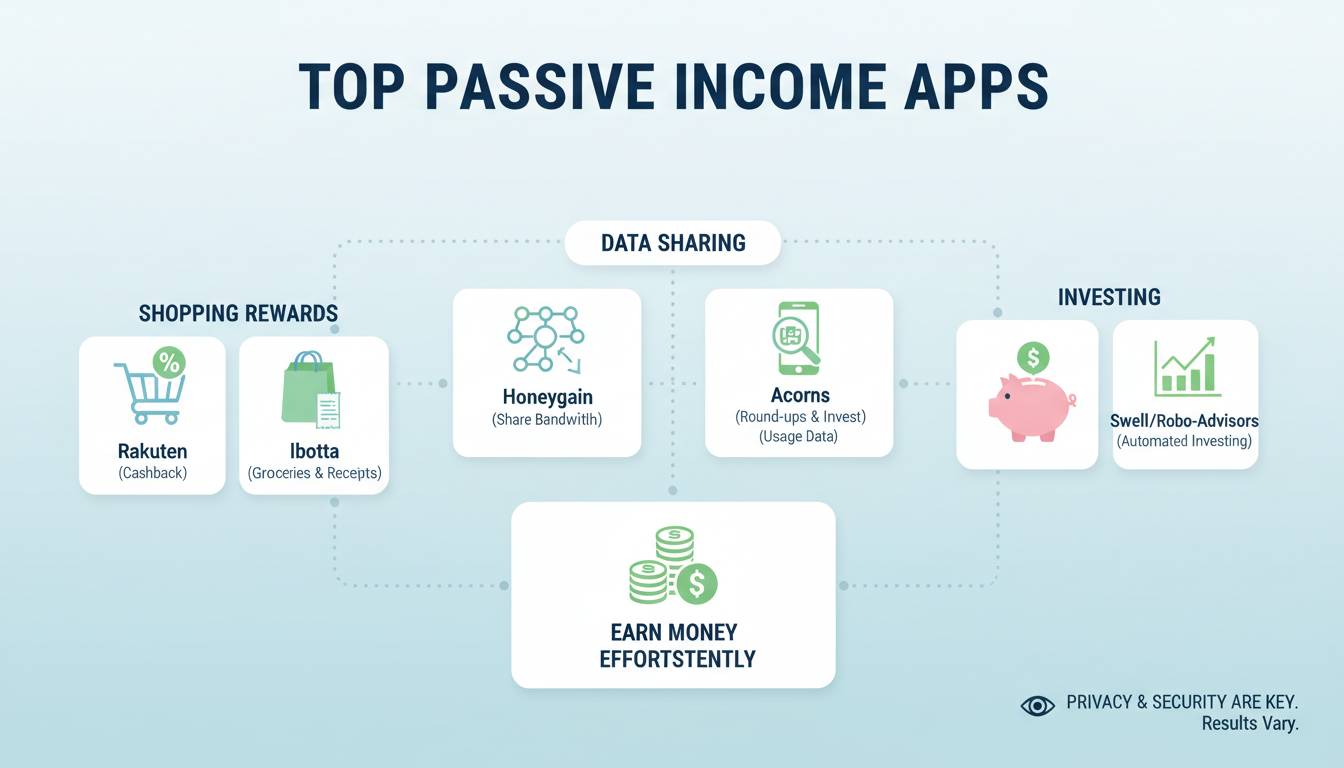
Mobile apps have genuinely changed how Americans can earn passive income. In 2025, there are more options than ever—investment platforms, cashback services, real estate apps, and content monetization tools. This guide covers the best passive income apps available, with honest analysis of what they actually deliver and who they’re best for.
Not every app lives up to the hype. Some make big promises but deliver little. The ones below have track records you can verify, real users who actually get paid, and fee structures that don’t eat up your earnings.
Understanding Passive Income Apps in 2025
Passive income apps automate financial processes that used to require hands-on management. They handle investing, cashback rewards, property rental, and content monetization—so you earn money without actively working on it every day.
The big appeal is accessibility. Most of these apps require little or no money to start and work from your phone. You don’t need to be a finance expert.
The market has grown up since the early cashback apps. Now you get automated investment algorithms, dividend reinvestment, and bank integration for smooth transfers. The space keeps expanding as people look for extra income streams.
Before you download anything, check the fine print: minimum deposits, fees, payout thresholds, and how much work is actually involved. Legit platforms are clear about risks. The sketchy ones make promises that sound too good to be true.
Best Investment and Savings Apps
Acorns: Automated Micro-Investing
Acorns is one of the most beginner-friendly apps for getting into investing without much money. The core feature is simple: it rounds up your purchases to the nearest dollar and invests the difference. Buy a $4.50 coffee, and 50 cents goes into your portfolio.
You get preset portfolios based on how much risk you want—conservative, moderate, or aggressive. The app handles everything after you set it up. There’s a monthly fee depending on which tier you choose, but it’s modest.
This is genuinely passive. Set it and forget it. That’s the appeal for busy people who want to invest without watching the market.
Robinhood: Commission-Free Trading
Robinhood made commission-free trading mainstream and still draws millions of users. Fractional shares let you buy parts of expensive stocks, so you can diversify even with $10.
For passive income, Robinhood gives access to dividend-paying stocks and a cash sweep program that pays interest on money sitting in your account. The interface is clean and easy for beginners building a dividend-growth portfolio.
One thing to know: Robinhood makes money through payment for order flow and premium subscriptions. This can sometimes create conflicts of interest. It’s not a dealbreaker, but understand how the platform makes money.
Stash: Guided Investment Platform
Stash takes an educational approach, helping users understand what they’re investing in. You can pick individual stocks, ETFs, or retirement accounts with low minimums.
The “Stock-Back” program invests a small percentage of purchases made with their debit card into fractional shares. Every purchase becomes an investment contribution automatically.
There’s a subscription fee for premium features. Whether it’s worth it depends on how much you value the guidance and extras.
Cashback and Rewards Apps
Rakuten: Premier Cashback Platform
Rakuten is a solid cashback option, giving you money back from thousands of retailers. Install the browser extension or use the app, activate cashback before you shop, and cash drops into your account.
They run promotions with higher cashback rates around Black Friday and similar events. New users often get welcome bonuses too.
Payouts come quarterly, and you need $5-10 to redeem. The reliability and selection make Rakuten a go-to for shopping rewards.
Ibotta: Grocery Cashback Leader
Ibotta focuses on grocery rebates—think supermarket purchases. Browse offers in the app before you shop, then scan your receipt or link your loyalty card for automatic rebates.
They’ve expanded beyond groceries to include retail, entertainment, and travel. Ibotta PRO gives subscribers higher earnings and exclusive offers for a small monthly fee.
You can cash out via direct deposit, PayPal, or gift cards. For regular grocery shoppers, this takes seconds per week for real money back.
Fetch Rewards: Receipt Scanning Simplified
Fetch makes cashback almost effortless. Scan any receipt from participating stores and earn points. No need to pick offers beforehand—Fetch matches your receipt to available rewards automatically.
Points add up with each scan, with bonus points for featured brands. Convert points to gift cards at various retailers.
After the initial setup, this is zero effort. If you shop at participating stores anyway, it’s free money for doing nothing.
Real Estate and Lending Platforms
Fundrise: Real Estate Investment Democratized
Fundrise lets ordinary people invest in commercial and residential properties with as little as $10. Previously, real estate was only for the wealthy.
Your money gets spread across properties in different markets, reducing risk compared to buying a single rental. Fundrise handles all the property management. You just collect your share of rental income and appreciation.
Returns have been decent—often better than traditional REITs—but real estate isn’t liquid. You can’t easily cash out like you can with stocks. Keep that in mind.
LendingClub: Peer-to-Peer Lending
LendingClub matches borrowers with individual lenders, offering better interest rates than banks for both sides. They handle loan servicing, payments, and collections.
You pick your risk tolerance. Higher-risk loans pay more interest but default more often. Their automated tools help you build a diversified lending portfolio.
Returns beat savings accounts and CDs, but there’s default risk. It’s a trade-off worth considering for passive income beyond traditional banking.
Content Creation and Digital Platforms
YouTube: Long-Term Passive Income
YouTube is still the biggest platform for content-based passive income. Once you hit monetization requirements (1,000 subscribers and 4,000 watch hours), videos earn ad revenue indefinitely.
Evergreen content works best—tutorials, reviews, educational videos that stay relevant. Time-sensitive content drops off. Building a passive income stream takes serious upfront effort, but the long-term payoff can be substantial.
CPM rates vary by content type and audience. Some niches pay far more than others.
Medium: Writing-Based Passive Income
Medium’s Partner Program pays writers based on member reading time and engagement. Good articles keep earning as long as they’re published.
The platform has built-in audience discovery, so you don’t need external marketing. Write once, earn passively.
Most writers make modest amounts. But the top performers can earn significant passive income from a body of work that just sits there earning.
Comparison: Key Features at a Glance
Here’s a quick look at the main options:
| Platform | Type | Minimum to Start | Key Benefit | Payout Frequency |
|---|---|---|---|---|
| Acorns | Investment | $5 | Automated round-ups | Immediate |
| Robinhood | Investment | $0 | Commission-free trading | Monthly |
| Rakuten | Cashback | $0 | Up to 40% cashback | Quarterly |
| Ibotta | Cashback | $0 | Grocery rebates | Weekly |
| Fundrise | Real Estate | $10 | Property diversification | Quarterly |
| LendingClub | Lending | $25 | Competitive returns | Monthly |
| YouTube | Content | $0 | Unlimited earning potential | Monthly |
| Medium | Content | $0 | Writing-based income | Monthly |
How to Maximize Your Passive Income Strategy
Don’t put all your eggs in one basket. Combine multiple apps and strategies. This protects you if one platform changes terms or shuts down.
Figure out your situation first. If you have little money, start with cashback apps and micro-investing platforms that need almost nothing. If you have savings sitting around, Fundrise or LendingClub might make more sense.
Time commitment varies. Cashback takes seconds per week. Content creation takes months before you see a paycheck. Match the platform to the time you actually have.
Check in on things periodically. Even passive income needs occasional attention to make sure it’s still working for you.
Frequently Asked Questions
How much money can I realistically make with passive income apps?
It depends on what you use and how much you put in. Cashback apps usually give $10-50/month if you’re active. Investment apps can give more—or less—depending on market performance. A realistic range with moderate effort across several platforms is $50-200/month.
Are passive income apps safe to use?
The apps in this guide are legitimate and have been around. But “safe” is relative. Investment apps carry market risk—there’s no guarantee. Cashback apps are safer but won’t make you rich. Do your own research and never invest money you can’t afford to lose.
Do I need to pay taxes on passive income from these apps?
Yes. Interest, dividends, and capital gains from investment apps are taxable. Cashback is usually fine, but it depends. Ask a tax pro if you’re unsure.
Which app is best for beginners?
Acorns and Rakuten are the easiest entry points. Acorns does the investing for you. Rakuten is basically free money for shopping you already do.
How long does it take to see returns?
Cashback is instant with qualifying purchases. Investments might take years to grow meaningfully. Content creation usually needs 6-12 months of consistent posting before income kicks in.
Can I use multiple passive income apps simultaneously?
Yes—in fact, that’s the best approach. Stack cashback apps, an investment app, and maybe something like Fundrise. Just don’t spread yourself too thin to manage effectively.
Conclusion
Passive income apps in 2025 offer real ways to earn money without trading your time directly. Acorns and Robinhood for investing, Rakuten and Ibotta for cashback, Fundrise for real estate, YouTube and Medium for content—there’s something for every situation and risk tolerance.
Set realistic expectations. These won’t make you rich overnight. But combined thoughtfully, they can build into meaningful side income. Start with the easiest ones (cashback apps), then expand as you learn what works for you.
The space keeps changing. New apps emerge, features update, terms shift. Keep an eye on what you’re using and stay willing to switch things up.