
The NFT market has undergone significant transformation in 2024, with trading volumes shifting dramatically between platforms and new competitors challenging established players. Whether you’re an artist launching your first collection, a collector searching for rare digital assets, or an investor evaluating marketplace opportunities, choosing the right platform can mean the difference between seamless transactions and costly mistakes.
This comprehensive comparison analyzes the leading NFT marketplaces across the factors that matter most—fees, blockchain compatibility, user experience, liquidity, and platform-specific advantages—to help you find the perfect fit for your needs.
Understanding NFT Marketplace Architecture
NFT marketplaces function as specialized e-commerce platforms where users can buy, sell, and trade non-fungible tokens. However, not all marketplaces operate identically. The underlying architecture significantly impacts your experience, costs, and potential reach.
Centralized vs. Decentralized: Some marketplaces operate as centralized platforms (like OpenSea Pro) that manage infrastructure and customer service, while others function as decentralized protocols (like Sudoswap) where peer-to-peer trading occurs directly through smart contracts. Centralized platforms generally offer better customer support and user interfaces, while decentralized options often provide lower fees and greater sovereignty over your assets.
Multi-chain vs. Single-chain: Marketplaces may support a single blockchain (Solana-based Magic Eden) or multiple chains (跨链 NFT platforms like OpenSea). Multi-chain platforms offer broader reach but may sacrifice depth, while single-chain marketplaces often provide better liquidity within their specific ecosystem.
Aggregator vs. Standalone: NFT aggregators like Blur and OpenSea Pro compile listings from multiple sources, enabling users to compare prices across platforms and execute sweeping transactions. Standalone marketplaces host their own curated listings, which can mean better quality control but reduced discoverability.
Understanding these fundamental distinctions helps narrow your options before diving into specific platform comparisons.
Top NFT Marketplaces Ranked by Category
OpenSea: The Industry Giant
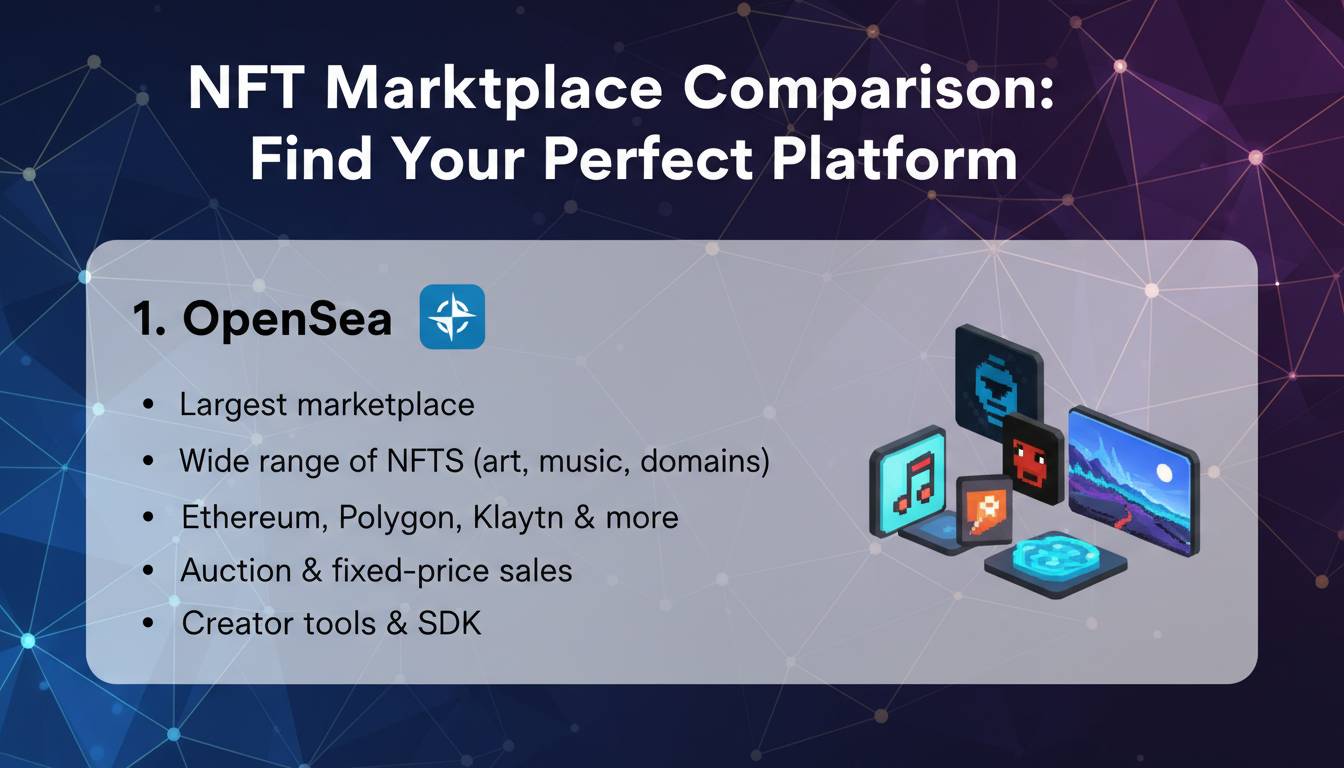
OpenSea remains the largest NFT marketplace by volume and user base, processing billions in monthly trading volume despite facing increased competition throughout 2023 and 2024. The platform supports Ethereum, Polygon, Solana, and Base, making it the most versatile multi-chain option available.
SecureHabbo – New Marketplace nft
– Opening date: August 12, 2024
Retweet + tag 2 friends to participate
– 1° NFT Throne
– 2° NFT Reindeer Slippers
– 3° Sack of 500 EmeraldsEnds: August 12, 2024https://t.co/2JhnslAF2G pic.twitter.com/p4sxODZKlG
— XΞNTINΔL (@xentinalhb) August 7, 2024
What Are the 7 Best NFT Marketplaces to Buy and Sell NFTs in 2026?
byu/SafePrestigious2662 inBitgetReddit
Fees: OpenSea charges a 2.5% platform fee on all secondary sales, plus standard gas fees on Ethereum transactions. The platform introduced optional creator earnings (up to 10%) for initial sales, but this remains optional for sellers.
Strengths: Unmatched liquidity across most major NFT collections, intuitive interface suitable for beginners, robust API for developers, and extensive documentation. OpenSea’s brand recognition provides inherent trust for new users entering the NFT space.
Weaknesses: Gas fees on Ethereum can make small transactions economically unfeasible. The platform has faced criticism for slow response times during high-traffic periods and occasional delisting controversies.
Blur: The Trader’s Choice
Blur has emerged as the preferred platform for serious NFT traders and flippers, offering professional-grade tools and zero platform fees for traders. The platform gained massive market share in 2022-2023 and continues to challenge OpenSea’s dominance.
NFT Marketplace Development Companies in USA 2026 — Here's What I Found After 3 Months of Research
byu/Odd_Bag6910 intop10companies
Fees: Blur charges 0% platform fees for buyers and sellers, funding operations through its BLUR token incentives and marketplace pool activities. However, Ethereum gas fees still apply to transactions.
Strengths: Advanced portfolio analytics, real-time floor pricing, academic-grade market data, and the BLUR token incentive program that rewards active trading. Blur’s aggregation features allow users to sweep floors across multiple collections efficiently.
Weaknesses: The platform’s complexity can overwhelm newcomers. The BLUR token’s value has fluctuated significantly, affecting the long-term viability of incentive-based trading strategies. Some users report difficulty with customer support.
Magic Eden: The Solana Leader
Magic Eden dominates the Solana NFT ecosystem, commanding over 90% of Solana-based NFT trading volume. The platform has expanded to support Ethereum and Polygon, but its core strength remains in the Solana market.
Fees: Magic Eden charges 2% platform fees on secondary sales, among the lowest in the industry. Solana’s low transaction costs (typically $0.01-0.05) make micro-transactions viable.
Strengths: Lightning-fast transactions with minimal costs, strong community engagement within the Solana ecosystem, and exclusive launches from major projects. Magic Eden’s mobile experience outperforms competitors significantly.
Weaknesses: Solana’s ecosystem has experienced multiple outages, which can prevent trading during critical moments. The platform’s expansion beyond Solana has yet to match its dominance in its home market.
Foundation: Curated Excellence
Foundation takes a deliberately curated approach, requiring invitations or community approval for new collections. This exclusivity has fostered a reputation for high-quality digital art and established collectors.
Fees: Foundation charges a 5% platform fee, higher than most competitors, plus Ethereum gas fees. Creators receive 10% of initial sales and 10% of secondary sales in perpetuity.
Strengths: Exceptional curation ensures higher average quality than open marketplaces. The governance token (FOUNDATION) provides community voting rights on platform decisions. Strong institutional interest and prestigious art world recognition.
Weaknesses: High fees and entry barriers limit accessibility for new artists. Smaller trading volume compared to OpenSea means less liquidity for sellers.
Rarible: Community-Owned Trading
Rarible operates as a community-owned NFT marketplace with its RARI token enabling holder governance. The platform has pivoted toward enterprise solutions while maintaining its consumer marketplace.
Fees: Rarible charges 2.5% platform fees and supports Ethereum, Polygon, Flow, and Tezos. The protocol has introduced fee customization for verified creators.
Strengths: Community governance model appeals to users seeking decentralized platform ownership. Multi-chain support includes Flow and Tezos, attracting diverse creator communities. Rarible’s white-label solutions power several major brand NFT launches.
Weaknesses: Lower trading volume limits liquidity compared to OpenSea. The governance token model has struggled to maintain engagement, and platform development has slowed relative to competitors.
Fee Comparison and Cost Analysis
Transaction costs represent a critical factor, especially for frequent traders or those dealing with lower-value assets. Here’s how the major platforms compare:
| Marketplace | Platform Fee | Gas Responsibility | Hidden Costs |
|---|---|---|---|
| OpenSea | 2.5% | Buyer/Seller | Optional creator fees up to 10% |
| Blur | 0% | Buyer/Seller | BLUR token vesting requirements |
| Magic Eden | 2% | Buyer/Seller | Minimal gas costs (Solana) |
| Foundation | 5% | Seller | Higher creator royalty structure |
| Rarible | 2.5% | Buyer/Seller | Token holder requirements |
For Ethereum-based transactions, gas fees frequently exceed platform commissions, particularly during network congestion. During peak periods in 2023, Ethereum gas fees have reached 100+ gwei, making transactions cost $15-50 per swap. This reality favors either high-value transactions on Ethereum or low-cost alternatives like Solana for smaller trades.
Solana’s average transaction costs of less than $0.01 make it economically viable to list, delist, and relist items—strategies that would be prohibitively expensive on Ethereum. However, Solana’s ecosystem has experienced significant volatility, including multiple network outages in 2022 that left users unable to trade for hours or days at a time.
Blockchain Compatibility and Ecosystem Considerations
Your choice of blockchain often determines which marketplace options are available, with each chain offering distinct advantages:
Ethereum: The dominant blockchain for NFTs, hosting the majority of blue-chip collections (Bored Ape Yacht Club, CryptoPunks, Azuki). Maximum security and decentralization, but higher costs. Best for high-value trades and established collections.
Solana: Fast, low-cost transactions ideal for gaming NFTs and high-volume trading. Smaller but growing institutional interest. Best for beginners, gaming enthusiasts, and frequent traders.
Polygon: Ethereum Layer-2 solution offering near-zero gas fees while maintaining Ethereum security. Growing adoption for brand NFT drops and gaming. Best for brand experiences and casual collectors.
Base: Coinbase’s Layer-2 solution launched in 2023, attracting significant attention from new projects seeking low costs and Coinbase’s user base. Rapidly growing ecosystem with strong institutional backing.
Flow: Designed for mainstream consumer applications, hosting NBA Top Shot and other sports/entertainment NFTs. Better suited for sports fans and mainstream brand experiences.
The trend toward multi-chain support means most serious collectors maintain wallets across multiple blockchains, using aggregators to manage cross-ecosystem portfolios.
User Experience and Platform Features
Beyond fees and blockchain compatibility, the actual trading experience varies substantially between platforms:
For Beginners: OpenSea and Magic Eden offer the most intuitive onboarding experiences, with clear interfaces, comprehensive help documentation, and established reputations that reduce anxiety for new users. Both platforms support credit card purchases through integrated fiat on-ramps, eliminating the need to navigate cryptocurrency exchanges.
For Professional Traders: Blur provides the most sophisticated toolkit, including portfolio analytics, trait analysis, real-time floor monitoring, and efficient batch-listing tools. The learning curve is steep, but power users gain significant advantages.
For Digital Artists: Foundation’s curation model attracts serious collectors specifically seeking quality over quantity. The interface emphasizes visual presentation, which matters for art-focused transactions. However, the invitation-only model creates barriers for emerging artists.
For Gaming NFTs: Magic Eden’s dominance in the Solana gaming space, combined with Immutable X support for Ethereum-based gaming NFTs, provides the best liquidity for in-game assets. Several gaming-specific marketplaces (like Fractal) have also emerged for particular ecosystems.
Liquidity and Trading Volume Analysis
Liquidity—the ease of converting assets to cash without significant price impact—varies dramatically across platforms and collections:
OpenSea maintains the deepest liquidity for most Ethereum collections, with the highest number of active listings and buyers. However, specific collections may have concentrated liquidity on alternative platforms. For instance, certain NFT financial products trade primarily on specialized platforms like NFTFi or BendDAO.
Blur’s zero-fee structure attracted significant trading volume from professional market makers, creating competitive liquidity for popular collections. However, the platform’s reliance on BLUR token incentives has created questions about sustainability once token rewards diminish.
Solana marketplaces like Magic Eden have built strong local liquidity, though the smaller overall market means less depth than Ethereum’s major collections.
Foundation’s curated approach means fewer but more significant transactions, with higher average sale prices reflecting the platform’s quality positioning.
Security and Platform Risk Assessment
All NFT marketplaces carry inherent risks beyond market volatility:
Smart Contract Risk: Every NFT transaction relies on smart contracts, which may contain vulnerabilities. Major marketplaces conduct audits, but exploits still occur. OpenSea has experienced multiple security incidents, including the February 2022 phishing attack that resulted in $1.7 million in stolen NFTs.
Platform Risk: Centralized exchanges can freeze accounts, delist collections, or face regulatory action. Decentralized alternatives transfer this risk to users who must manage their own security but gain immunity from platform decisions.
Exit Scams: Smaller marketplaces pose higher risks of rug pulls, where operators disappear with user funds or valuable NFTs. Sticking to established platforms with proven track records provides the most security, albeit at higher fees.
The emergence of decentralized marketplaces and aggregators provides alternatives for users prioritizing security over convenience, though the user experience remains less polished.
Choosing Your Ideal NFT Marketplace
Selecting the right marketplace depends on your specific priorities:
Choose OpenSea if: You want maximum collection variety, plan to hold long-term, value brand trust, and don’t mind paying slightly higher fees for convenience.
Choose Blur if: You’re an active trader seeking professional tools, comfortable with platform complexity, and want to minimize platform fees.
Choose Magic Eden if: You focus on Solana NFTs, prioritize low transaction costs, and want the best mobile experience.
Choose Foundation if: You’re a serious digital artist seeking prestige, or a collector prioritizing quality over quantity.
Choose Rarible if: You value community governance, want multi-chain exposure beyond Ethereum/Solana, or prefer supporting decentralized platform models.
Most active NFT users maintain accounts on multiple platforms, using aggregators to compare prices and execute the best available deals. This approach maximizes opportunities but requires managing multiple interfaces and understanding platform-specific fee structures.
Conclusion
The NFT marketplace landscape in 2024 offers more options than ever, with each platform carving out distinct niches based on fee structures, blockchain focus, user experience, and community characteristics. No single marketplace dominates across all metrics—each involves tradeoffs between cost, convenience, security, and ecosystem access.
For beginners, OpenSea’s brand recognition and comprehensive support make it the logical starting point. Active traders benefit from Blur’s professional tools and zero fees. Solana enthusiasts find their home in Magic Eden. Art collectors gravitate toward Foundation’s curation. The key is understanding your priorities and matching them to platform strengths.
As the NFT market continues maturing, expect further specialization and competition. Multi-chain support will likely become standard, fee competition will intensify, and user experience will improve across all platforms. The “perfect” marketplace today may change as the ecosystem evolves—staying informed about developments across platforms ensures you can adapt your strategy as opportunities emerge.
Frequently Asked Questions
Which NFT marketplace has the lowest fees?
Blur currently offers the lowest platform fees at 0% for both buyers and sellers, though Ethereum gas fees still apply to transactions. For Solana-based trades, Magic Eden’s 2% fee combined with Solana’s minimal transaction costs ($0.01 or less) makes it highly economical for smaller trades.
Can I use multiple NFT marketplaces with one wallet?
Yes, most web3 wallets like MetaMask, Phantom, or Coinbase Wallet can connect to multiple marketplaces across different blockchains. You can list the same NFT on multiple marketplaces simultaneously, though this can create listing conflicts and confusion for buyers.
What is the safest NFT marketplace?
All major NFT marketplaces carry some risk, but established platforms with longer track records (OpenSea, Foundation) provide more security history to evaluate. Decentralized marketplaces eliminate platform risk but transfer security responsibility to individual users. No marketplace can fully protect against smart contract vulnerabilities or phishing attacks targeting users directly.
Do I have to pay gas fees on every marketplace?
Gas fees are determined by the underlying blockchain, not the marketplace. Ethereum transactions always require gas fees, which fluctuate based on network congestion. Layer-2 solutions like Polygon and Base offer near-zero gas fees. Solana transactions have minimal costs regardless of which marketplace you use on that blockchain.
Can I switch NFT marketplaces after buying?
Yes, once you purchase an NFT, it resides in your wallet and can be listed on any marketplace that supports its blockchain. You can list a purchased NFT on a different marketplace than where you bought it, or even list it on multiple platforms simultaneously (though this can cause confusion).
Which NFT marketplace is best for beginners?
OpenSea and Magic Eden offer the most beginner-friendly experiences with intuitive interfaces, comprehensive guides, and fiat payment options. Magic Eden on Solana offers the additional advantage of minimal transaction costs, allowing new users to experiment without risking significant funds in gas fees.