
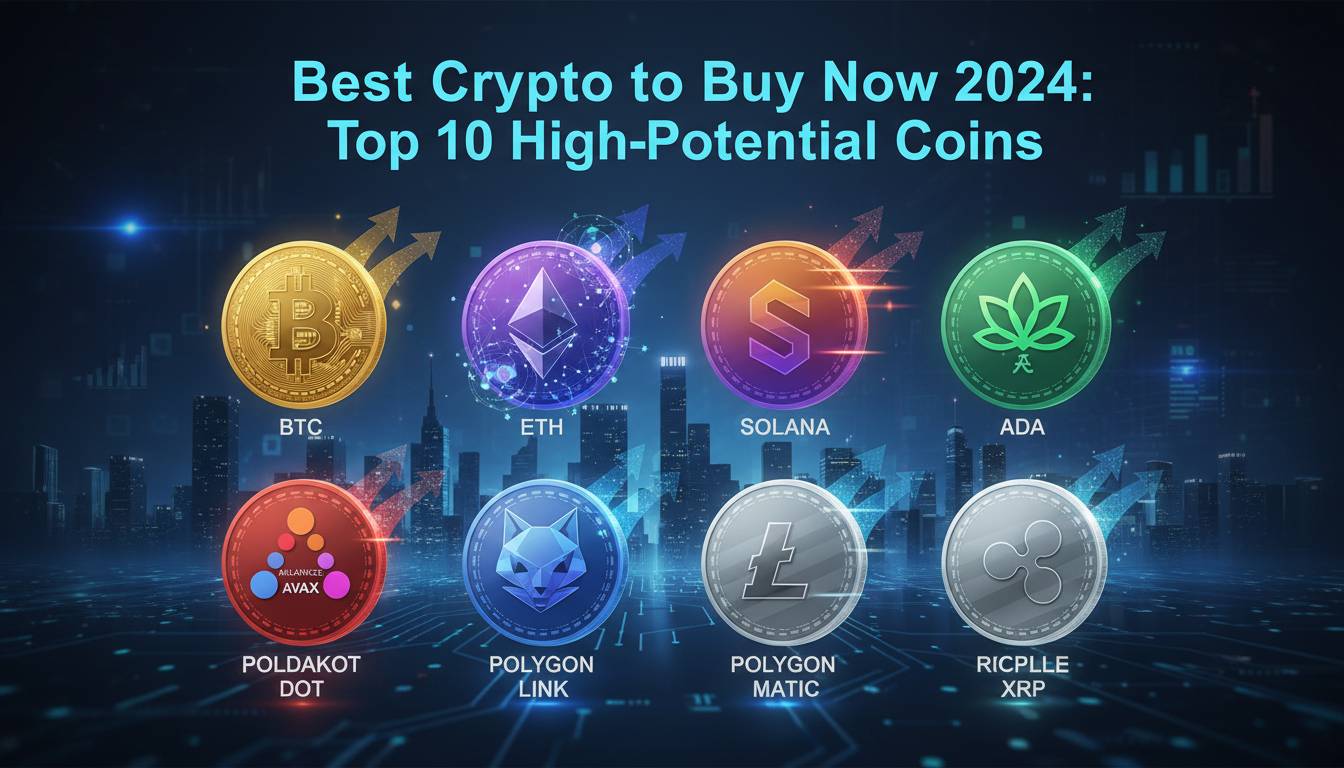
The crypto market in 2024 is a different beast than it was even two years ago. Institutional money is actually here, regulators are finally saying something (even if it’s confusing), and the technology has matured enough that you can actually use some of this stuff without paying $50 in gas fees. That said, volatility still rules—10% swings in a day will never not be stressful.
This guide breaks down what matters when evaluating crypto investments and which categories deserve your attention right now.
The 2024 Crypto Landscape
Institutional adoption accelerated through 2024. Major banks and investment firms now offer crypto products to clients, something that would have sounded absurd in 2020. Bitcoin and Ethereum still dominate, but layer-2 solutions and cross-chain protocols have become legitimate infrastructure rather than speculative bets.
Volatility hasn’t gone anywhere. Moves of 10% or more in 24 hours still happen regularly. Risk management isn’t optional—it’s the only thing standing between you and a panic sell at 3am.
Regulatory clarity is slowly improving. The SEC and other global regulators have started providing more guidance on classification and compliance, though the rules remain a moving target. Trading volumes across major exchanges have stayed strong, and total crypto market cap has held between $2 trillion and $2.5 trillion for most of the year.
What Actually Matters When Picking Cryptocurrencies
Skip the hype. Focus on these fundamentals:
Utility: Does this solve an actual problem? Tokens with real use cases—smart contracts, DeFi, supply chain tracking—outperform those riding pure speculation. Every cycle, “utility tokens” become a meme until they don’t. The difference is whether the token does something.
Development activity: Check GitHub. Look at commit frequency and developer participation. Dead projects have quiet repos. Active development means someone still cares.
Tokenomics: Total supply, inflation rate, how the token gets used within its ecosystem. Deflationary mechanics (burning tokens) can create scarcity pressure. Tokens with clear utility tend to hold value better than pure monetary assets.
Regulatory positioning: Projects that work with regulators instead of around them tend to last longer. Look for clear legal structures and transparency.
Major Cryptocurrencies Worth Watching
Bitcoin (BTC)
The original crypto. $1 trillion+ market cap. Store of value narrative has stuck better than anyone expected.
Institutional adoption is real—corporations and funds are holding Bitcoin on balance sheets now. The 21 million supply cap is immutable, which is the entire point. That’s your inflation hedge.
Network security keeps improving as hash rate increases. Taproot upgrade added some smart contract capability, though Bitcoin remains focused on being digital gold rather than an app platform.
Ethereum (ETH)
Smart contract platform. Most DeFi and dApps run on Ethereum—it has the development ecosystem and network effects no one else has matched.
The Merge to proof-of-stake happened, and subsequent upgrades have cut energy use dramatically. Layer-2 solutions (Arbitrum, Optimism, Base) have fixed the congestion and cost issues that plagued the network for years. You can actually use Uniswap now without crying.
Solana (SOL)
Fast. Really fast. Proof-of-history lets the network handle thousands of transactions per second, which makes it viable for mainstream applications.
The ecosystem took some hits from past outages, but recent stability improvements have restored confidence. Developer activity remains strong, and the DeFi and NFT scenes are functional. Low fees help.
Chainlink (LINK)
Oracles. Smart contracts can’t access off-chain data by default—Chainlink provides that bridge. Every DeFi protocol that needs price feeds uses Chainlink.
Partnerships with major corporations and financial institutions give it legitimacy beyond the crypto bubble. As more real-world data gets integrated with blockchain systems, oracle solutions become infrastructure.
Polkadot (DOT)
Cross-chain interoperability. Different blockchains talking to each other is actually hard, and Polkadot built a framework for it.
Parachain auctions have brought diverse projects into the ecosystem. When everything is supposed to be “interoperable,” having actual technology that enables it matters.
Emerging Categories Worth Tracking
Layer-2 solutions: Built on Ethereum, processing transactions off-chain before settling on base layer. TVL has grown substantially. Arbitrum and Optimism lead, but Base (built by Coinbase) is gaining fast.
DeFi blue-chips: Lending protocols and DEXs that have survived multiple cycles. Not exciting, but they work. MakerDAO, Aave, Uniswap—the actual functional infrastructure.
AI + blockchain: The intersection has hype, but some projects are building actual tools. Data integrity for AI models, decentralized compute, that kind of thing. Worth watching, easy to overpay for right now.
What Could Go Wrong
Let’s be real about risks:
-
Volatility kills portfolios: Don’t invest money you need. Crypto can drop 30% in a week and take months to recover.
-
Regulatory changes: Governments haven’t figured out what crypto is yet. A bad ruling could crush specific projects or the whole market.
-
Scams and hacks: Billions lost to hacks annually. Use hardware wallets. Enable 2FA. If a project seems too good to be true, it is.
-
Technology fails: Blockchain is young. Projects promise things they can’t deliver. Competitors build better solutions. This is a technology bet, and tech bets fail regularly.
How to Actually Invest
Dollar-cost averaging: Buy consistently over time. Don’t try to time the bottom—you can’t. Systematic purchases remove the stress of watching charts.
Don’t put all your money in one place: Spread across Bitcoin, Ethereum, and 2-3 others you actually understand. Diversification isn’t sexy but it works.
Actually learn about what you’re buying: Read the whitepaper. Check the team. Look at the token distribution. “Diamond hands” is a meme; due diligence is not.
Hold for years, not days: The people who made money in crypto held through multiple crashes. The people who lost everything panic-sold. Patience is the only edge most people have.
FAQ
Is 2024 a good time to invest?
2024 has more institutional support and regulatory clarity than previous years. That doesn’t mean no risk—just that the market is more mature. Invest based on your own research and risk tolerance.
What’s the safest crypto?
Bitcoin and Ethereum are the most established. Largest market caps, longest track records, most liquidity. Nothing is “safe,” but these have survived multiple cycles.
How much should I allocate?
Most financial advisors suggest 1-5% of a diversified portfolio. Crypto is a small position for most people, even if it feels like everything.
Bitcoin or Ethereum?
Different assets. Bitcoin is digital gold—a store of value. Ethereum is infrastructure—a platform for applications. Many portfolios hold both.
How do I evaluate a token?
Look at: real utility, team transparency, tokenomics, competitive landscape, regulatory stance. Spend more than 20 minutes on research.
Is crypto taxable?
In the US, yes. It’s treated as property. Capital gains apply. Keep records of every transaction.
The Reality
Crypto in 2024 isn’t the wild west anymore, but it’s not boring either. The fundamentals have improved—actual applications exist, institutions participate, regulatory frameworks are forming. That doesn’t remove risk. It just means the market is growing up.
Bitcoin and Ethereum will probably be fine. They’re the anchors. Layer-2 solutions and cross-chain protocols offer more upside but more uncertainty. The usual rules apply: don’t invest what you can’t afford to lose, do your own research, and don’t get swayed by influencers shilling coins on Twitter.
The space will keep evolving. Some of these projects will fail. A few will become huge. That’s how it always works.