
Getting into cryptocurrency means figuring out where to store your coins, and honestly, the options can be overwhelming. There are thousands of wallets out there, and they all claim to be the best. This guide breaks down what actually matters for beginners—security, ease of use, and fees—so you can pick something that works without the headache.
Understanding Crypto Wallets: A Beginner’s Overview
A crypto wallet doesn’t actually hold your cryptocurrency. What it holds is your private keys, which are basically the passwords that prove you own your coins and let you sign transactions. Think of it like a key to a safety deposit box rather than the box itself.
Hot wallets vs. cold wallets is the first big distinction. Hot wallets connect to the internet—they’re apps on your phone, programs on your computer, or web-based platforms. They’re convenient and great for frequent trading. Cold wallets are physical devices that stay offline. They’re more secure because hackers can’t reach them, but they’re less convenient for everyday use. Most beginners should start with a hot wallet and consider adding a cold wallet later if they accumulate significant holdings.
You also need to understand custodial vs. non-custodial. A custodial wallet means a company holds your private keys for you, kind of like a bank. If they get hacked or go out of business, you could lose your funds. A non-custodial wallet puts you in complete control—you’re the only one with your keys. This is closer to how crypto was meant to work, but it also means you’re fully responsible for security. No password recovery, no customer service to help you get back in.
Key Features Every Beginner Should Consider
Picking a wallet means weighing a few different factors. Here’s what actually matters:
Security is obviously huge. Look for two-factor authentication, biometric login (fingerprint or face ID), and backup phrase options. The best beginner wallets layer these together without making you jump through hoops every time you want to check your balance.
Ease of use makes a bigger difference than people realize. A confusing interface leads to mistakes—like sending coins to the wrong address, which is basically throwing money away. The best wallets feel as simple as Venmo or PayPal, not like you’re using specialized software.
What coins does it support? Some wallets only do Bitcoin and Ethereum. Others support thousands of tokens. If you know exactly what you want to buy, check that it’s supported first. Nothing worse than getting set up and then realizing your wallet doesn’t work with your chosen coin.
Fees catch people off guard. Most wallets are free to download, but they charge when you buy, sell, or swap. Some markup the exchange rate. Others charge network fees. These add up, especially if you’re trading frequently.
Customer support matters more than you’d think when you’re starting out. Stuff goes wrong. You have questions. Having someone to actually talk to—not just a FAQ page—can be the difference between solving a problem in minutes or losing sleep for days.
Top 5 Best Crypto Wallet for Beginners
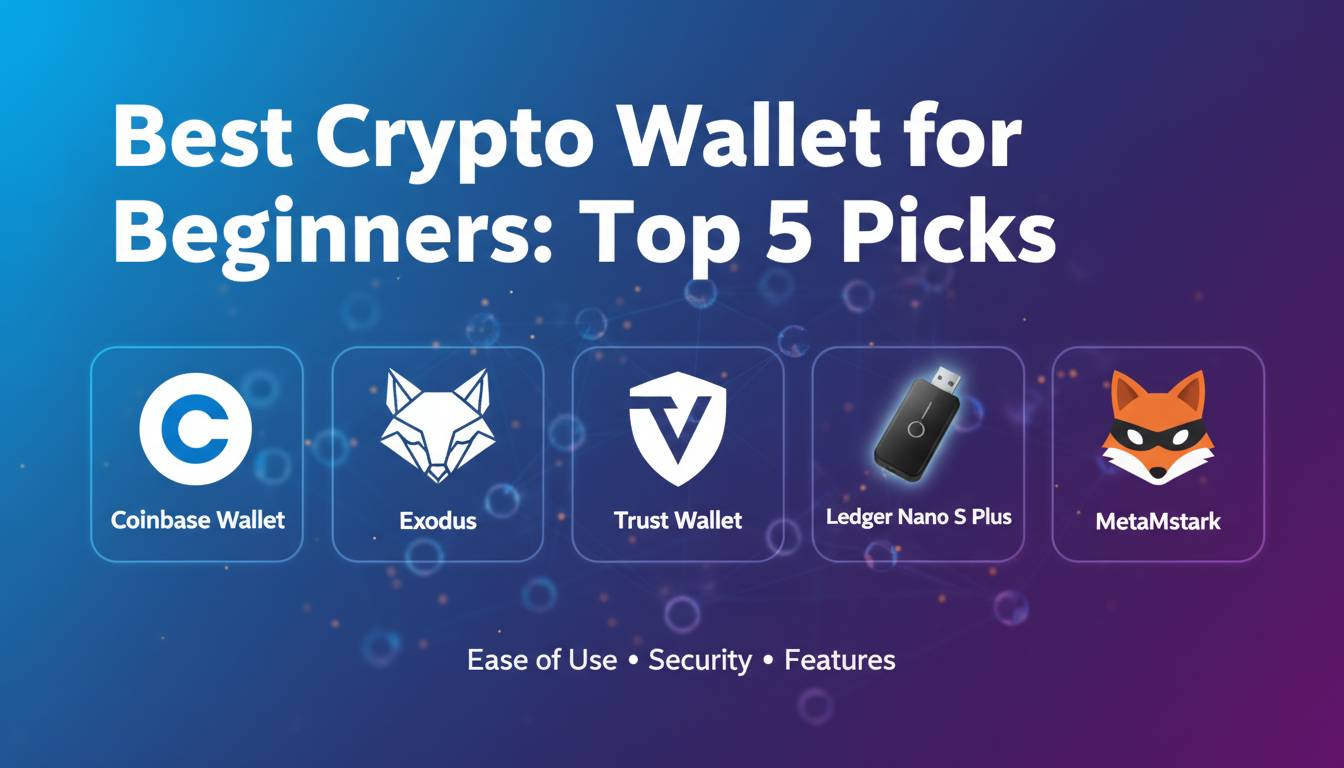
Based on overall user experience, security, and value, here are the five wallets I’d recommend for beginners in 2024:
Coinbase Wallet: Best Overall
Coinbase Wallet is the most well-rounded option for most people. It’s made by Coinbase, one of the biggest regulated crypto exchanges in the US, so they have actual regulatory oversight and a reputation to protect.
It supports over 5,000 cryptocurrencies, which covers basically anything a beginner would want. The interface is clean and explains things in plain English—important when you’re approving transactions you don’t fully understand. Buying crypto directly through the app using your bank account or debit card is seamless, which removes a big barrier for new users.
Security includes biometric login, encrypted cloud backup, and the option to connect a hardware wallet (Ledger or Trezor) if you want to level up later. It’s non-custodial, meaning you control your private keys, not Coinbase. That last part is genuinely important—a lot of people don’t realize that keeping crypto on the exchange itself means you’re trusting them with your keys.
Trust Wallet: Best Mobile Experience
Trust Wallet is the move if you want something that just works on your phone. It got bought by Binance, the biggest crypto exchange globally, so it’s got serious backing behind it.
The app supports millions of assets across multiple blockchains—Bitcoin, Ethereum, BNB Chain, and various layer-2 networks. It has built-in staking, so you can earn rewards on your holdings without moving money to another platform. There’s also a decentralized exchange built in, so you can swap tokens directly without going to a separate website.
Security-wise, your private keys stay on your device. There’s biometric authentication and a secure browsing mode for interacting with decentralized apps. The Web3 browser opens up the whole DeFi world if you want to explore beyond just holding coins.
MetaMask: Best for DeFi and Web3 Exploration
MetaMask is basically required if you want to mess with decentralized finance, NFTs, or Web3 apps. It’s a browser extension and mobile app, giving you flexibility in how you use it.
It’s designed around Ethereum and networks that work the same way (EVM-compatible chains). If you want to use Uniswap, OpenSea, Aave, or any of the thousands of dApps out there, MetaMask is how you connect to them. This makes it essential for anyone interested in more than just buying and holding Bitcoin.
Setup takes a few minutes. It gives you a 12-word recovery phrase—write that down and keep it safe. The interface shows you exactly what you’re signing before you approve any transaction, which is crucial when gas fees can vary wildly.
One heads-up: Ethereum network fees can get expensive during busy times. MetaMask shows you the fee upfront, but just know it’s something to factor in.
Exodus: Best Design and User Interface
Exodus stands out because it actually looks good. The team put real effort into making cryptocurrency feel less intimidating and more like a modern app you want to use.
It supports over 300 cryptocurrencies across different blockchains, with built-in exchange features for swapping between assets. The portfolio view shows your holdings and performance in a way that actually makes sense—no finance degree required. The desktop app is particularly nice if you prefer managing crypto from your computer.
Security is non-custodial—your keys are encrypted locally on your device. You can also connect a Trezor hardware wallet if you want extra protection. Yes, Exodus costs more in transaction fees than some competitors. But if the experience matters to you, it’s worth it.
Ledger Nano X: Best Hardware Wallet for Security
If you’re serious about crypto and plan to hold meaningful amounts, the Ledger Nano X is the gold standard for cold storage.
Hardware wallets keep your private keys on a secure chip that never connects to the internet. Even if your computer has malware, your keys stay safe. The device itself handles transaction signing, so your computer never sees your secrets. This is real security, not just passwords and 2FA.
It supports over 5,500 cryptocurrencies—more than just about anything else. The Ledger Live app manages everything from one place. Yes, it’s an upfront purchase, and yes, the setup takes more time than downloading an app. But if you’re holding crypto you plan to keep for years, the peace of mind is worth it.
How to Set Up Your First Crypto Wallet
Setting up a wallet takes maybe 15-20 minutes if you take your time. Here’s the real process, not the idealized version:
Get it from the right place. Download from the App Store, Google Play, or the official website. Don’t click links in emails or random tweets. Fake wallet apps exist, and they will steal everything.
Your recovery phrase is everything. The wallet will generate 12 or 24 words. WRITE. THIS. DOWN. On paper. Store it somewhere safe—not on your computer, not in your email, not on a note app. Anyone with these words can take everything. But if you lose them, no one can help you. There is no password reset.
Actually use it before moving serious money. Send a small test transaction first. See how the process works. Make sure you understand what you’re clicking. Mistakes with crypto are usually permanent.
Frequently Asked Questions
What’s the best crypto wallet for beginners in 2024?
Coinbase Wallet is the safest recommendation for most people. It’s intuitive, has good support, and the security features work without being complicated. The integration with Coinbase (the exchange) makes buying crypto straightforward, which is usually the first thing beginners want to do.
Are crypto wallets free?
The software wallets (Coinbase Wallet, Trust Wallet, MetaMask, Exodus) are free to download. You’ll pay fees when you actually use them—buying, selling, or swapping. Hardware wallets cost money upfront (usually $80-$250) but often have lower ongoing fees.
Do I need a wallet if I use an exchange?
You don’t technically need one, but it’s safer to have your own. Exchange wallets are custodial—if the exchange gets hacked or goes bankrupt, you could lose everything (it’s happened). Using your own non-custodial wallet means you own your keys directly.
What’s the safest wallet for beginners?
For most people, Coinbase Wallet or Trust Wallet are safe enough while being easy to use. If you’re holding serious money, add a hardware wallet like Ledger for long-term storage. That’s the combo most experienced people use.
Can I have multiple wallets?
Absolutely. Many people use a mobile wallet for spending and a hardware wallet for savings. Using different wallets for different purposes is normal.
What happens if I lose my wallet?
If you lose the device but have your recovery phrase, you can restore everything on a new device. That’s exactly why the phrase matters so much. Lose the phrase and your coins are gone forever—there’s no bank to call.
Conclusion
Pick Coinbase Wallet if you want the easiest all-around experience. Pick Trust Wallet if you’re mobile-first and want DeFi features. Pick MetaMask if you’re interested in Web3 apps and DeFi. Pick Exodus if design matters to you. Pick Ledger if you’re holding serious money and want real security.
Whichever you choose, the most important thing is protecting that recovery phrase. Write it down. Store it somewhere secure. Don’t share it with anyone. Everything else is secondary to that.