
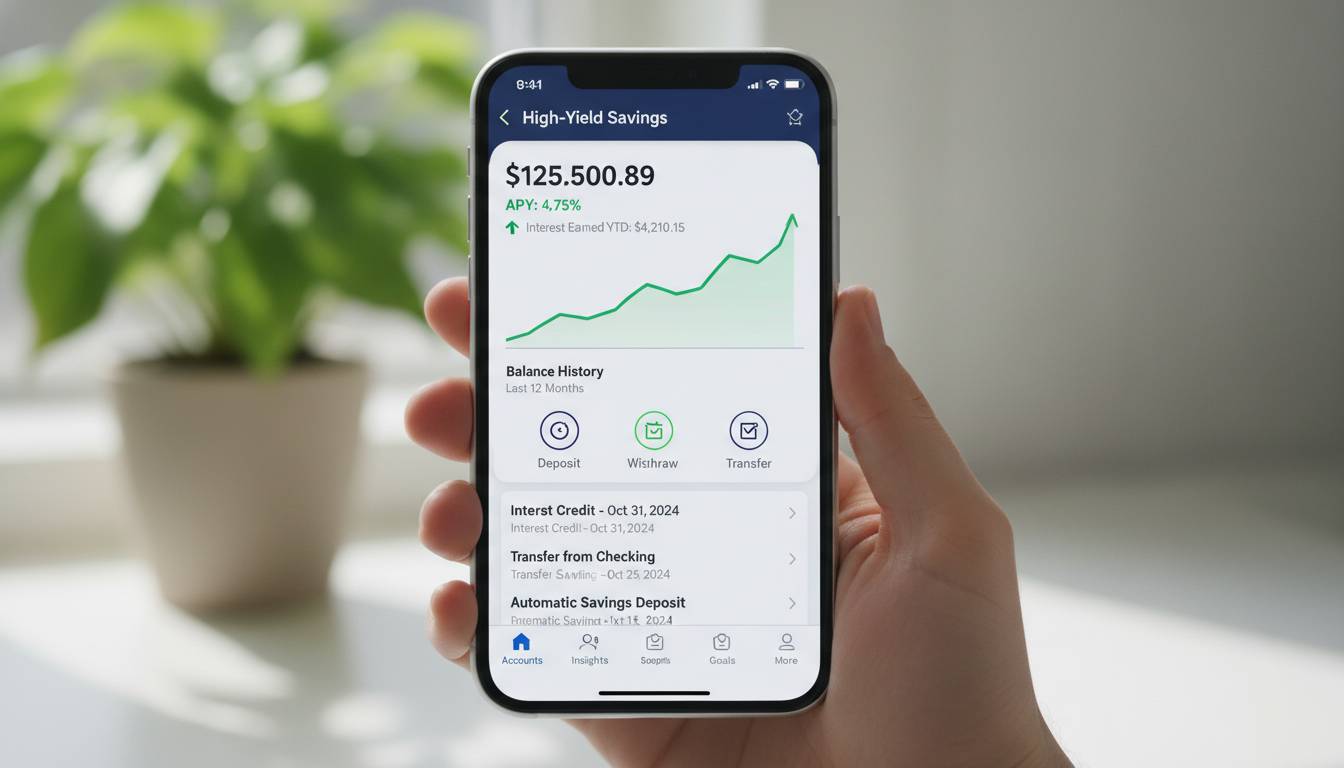
High-yield savings accounts have become a popular way for Americans to grow emergency funds, save for major purchases, or earn decent returns on cash without gambling on the stock market. In 2025, online banks and fintech platforms continue offering annual percentage yields (APYs) that put traditional brick-and-mortar institutions to shame. Understanding what makes these accounts different—and which providers are worth your time—can help you stop letting your money rot in accounts that barely earn anything.
The Federal Reserve’s rate decisions throughout 2024 and into 2025 directly influence what banks pay on savings. When the Fed raises rates, yields on high-yield savings tend to go up. When rates fall, your returns shrink. This guide walks through the top performers, explains what actually matters when comparing accounts, and helps you pick one that fits your situation.
A high-yield savings account pays interest at a rate way higher than the national average for regular savings accounts. Online banks, credit unions, and fintech companies typically offer these because they don’t have branches to maintain, so they can afford to pass those savings to you in the form of better rates.
The basics work like any savings account: you deposit money, earn interest on that balance, and can withdraw funds (though federal rules limit you to six withdrawals per month). The big difference is the APY—that’s the annual percentage yield, which includes compound interest. Higher APY means more money in your pocket.
High-yield savings accounts aren’t the same as money market accounts or CDs. CDs lock your money away for months or years—you can’t touch it without paying penalties. High-yield savings give you full access to your cash whenever you need it. Money market accounts sometimes come with check-writing privileges or debit cards, but high-yield savings are more stripped-down, built primarily for earning interest on money you’re not planning to touch regularly.
The federal funds rate matters here. When the Fed raises rates, banks usually follow suit and boost their APYs. When rates drop, your yields tend to drop too. Worth keeping an eye on Fed announcements if you’re trying to time when to open or switch accounts.
What to Look for in a High-Yield Savings Account
Don’t just chase the highest APY. Here’s what actually matters:
APY is your main comparison point—it shows the actual annual return on your money. But here’s the catch: rates are variable and can change anytime. Some accounts lure you in with a great promotional rate, then slash it after a few months. Dig into whether the rate is promotional or ongoing.
Minimum deposit requirements vary widely. Some accounts let you open with nothing. Others want $1,000, $5,000, or more to earn the advertised rate or avoid monthly fees. Make sure you can meet the minimum without emptying your savings.
Fee structures can quietly eat your earnings. Many high-yield accounts charge no monthly fees, but some hit you with charges for excessive transactions, paper statements, or inactive accounts. Read the fine print.
FDIC or NCUA insurance protects your deposits. FDIC covers up to $250,000 per depositor at member banks. Credit unions have NCUA coverage with the same protection. Either way, your principal is safe even if the bank goes under. Verify coverage if you’re using an online bank you’ve never heard of.
Access and convenience affects your daily experience. How’s the mobile app? Can you easily transfer money? Is customer service actually reachable? These details matter when something goes wrong.
Compound frequency is how often interest gets added to your balance. Daily compounding is best—it maximizes your returns. Monthly is still fine, but daily is slightly better.
Top High-Yield Savings Accounts Available in 2025
The market has plenty of options. Here’s what you’re dealing with:
Online banks usually offer the best APYs because they don’t have physical branches. That overhead savings gets passed to customers. Expect rates several times higher than traditional banks—often in the 4-4.5% range compared to under 1% at big brick-and-mortars. The trade-off is you won’t walk into a branch; everything happens online or through apps.
Credit unions sometimes have competitive high-yield savings, especially if you qualify for membership. Since they’re not-for-profit, earnings often go back to members rather than shareholders. The catch: membership requirements vary, and some credit unions have limited branch networks or clunky digital platforms.
Fintech platforms have moved into this space, partnering with FDIC-member banks to offer accounts with competitive rates and slick mobile experiences. They’re basically middlemen—you’re still banking with an FDIC-insured institution, but the fintech handles the interface. Just make sure you know which bank actually holds your money.
When comparing specific accounts, look for consistency over time. Some banks hook you with a great rate then slowly drop it. Others maintain steadier rates. Check customer reviews, look up complaints with the Consumer Financial Protection Bureau, and see if the institution has a pattern of rate cuts after promotional periods end.
How to Maximize Your High-Yield Savings Returns
Picking the right account is step one. Here’s how to get the most out of it:
Set up automatic deposits. Consistent contributions compound over time. Even $200 a month adds up faster than you’d expect when it’s earning interest.
Don’t treat it like a checking account. The six-withdrawal monthly limit exists for a reason. These accounts work best for money you’re setting aside—emergency funds, down payments, savings goals. Touching it constantly kills your compounding.
Check your rate against alternatives periodically. Rates change. What was competitive six months ago might be below market now. Set a calendar reminder every few months to see what’s out there.
Think about laddering if you have a large sum. Spreading money across multiple accounts can reduce rate risk and give you flexibility if you want to move funds later.
Remember the tax man. Interest you earn is taxable income. Keep records for tax season. If you’re saving for retirement, a Roth IRA might make more sense tax-wise.
Common Concerns About High-Yield Savings Accounts
Is my money safe with an online bank? Yes, if it’s FDIC-insured. The coverage is the same whether you bank online or at a branch with a lobby and teller windows. Use the FDIC BankFind tool to verify coverage if you’re unsure.
Is switching from my regular bank worth the hassle? Do the math. $10,000 at 4.5% APY earns about $450 in a year. The same money at 0.5% earns $50. That’s a $400 difference. Multiply that by larger balances or multiple years, and the answer gets obvious pretty fast.
What if I need customer service? Most online banks offer phone, chat, and email support. Some have 24/7 availability. The experience is usually fine—unless something goes seriously wrong, in which case you might want a bank with a phone number you can actually call and talk to a human.
Conclusion
High-yield savings accounts are worth having in 2025. They pay real interest on liquid deposits, come with FDIC protection, and don’t require you to lock your money away. The trick is picking an account with a consistently good rate, reasonable terms, and service you can count on.
The specific best rates will shift as the market changes. What matters is sticking to the fundamentals: compare APYs, watch out for promotional rates that drop, check fees, and verify insurance coverage. Take a few minutes to research your options instead of leaving your savings in an account earning 0.01%.
Frequently Asked Questions
What is a high-yield savings account?
A high-yield savings account is a deposit account that pays interest at a rate much higher than typical traditional savings accounts. Online banks and credit unions offer them because they have lower operating costs, and they pass those savings to customers through better rates. Your deposits stay FDIC or NCUA insured up to $250,000.
Are high-yield savings accounts safe?
Yes. Accounts at FDIC-insured banks or NCUA-insured credit unions are protected up to $250,000 per depositor. Your money is guaranteed regardless of what happens to the stock market or the bank’s financial health.
How much can I earn with a high-yield savings account?
It depends on your balance and the APY. $10,000 at 4.5% APY earns roughly $450 in a year. The same $10,000 at a typical 0.5% traditional savings rate earns about $50. The gap grows with larger balances.
What should I look for when comparing accounts?
Focus on the ongoing APY (not just promotional rates), minimum deposit requirements, fees, customer service quality, mobile app usability, and confirmation of FDIC or NCUA insurance. Promotional rates that drop after a few months aren’t as valuable as steadier rates.
Are there withdrawal limits?
Federal Regulation D typically limits withdrawals to six per month. Most people never hit this, but if you need frequent access, check the bank’s specific policy.
How often do these rates change?
APYs are variable and can change anytime based on the bank’s decision and broader economic conditions, especially the federal funds rate. Unlike CDs with fixed rates, expect your APY to fluctuate with the market.