
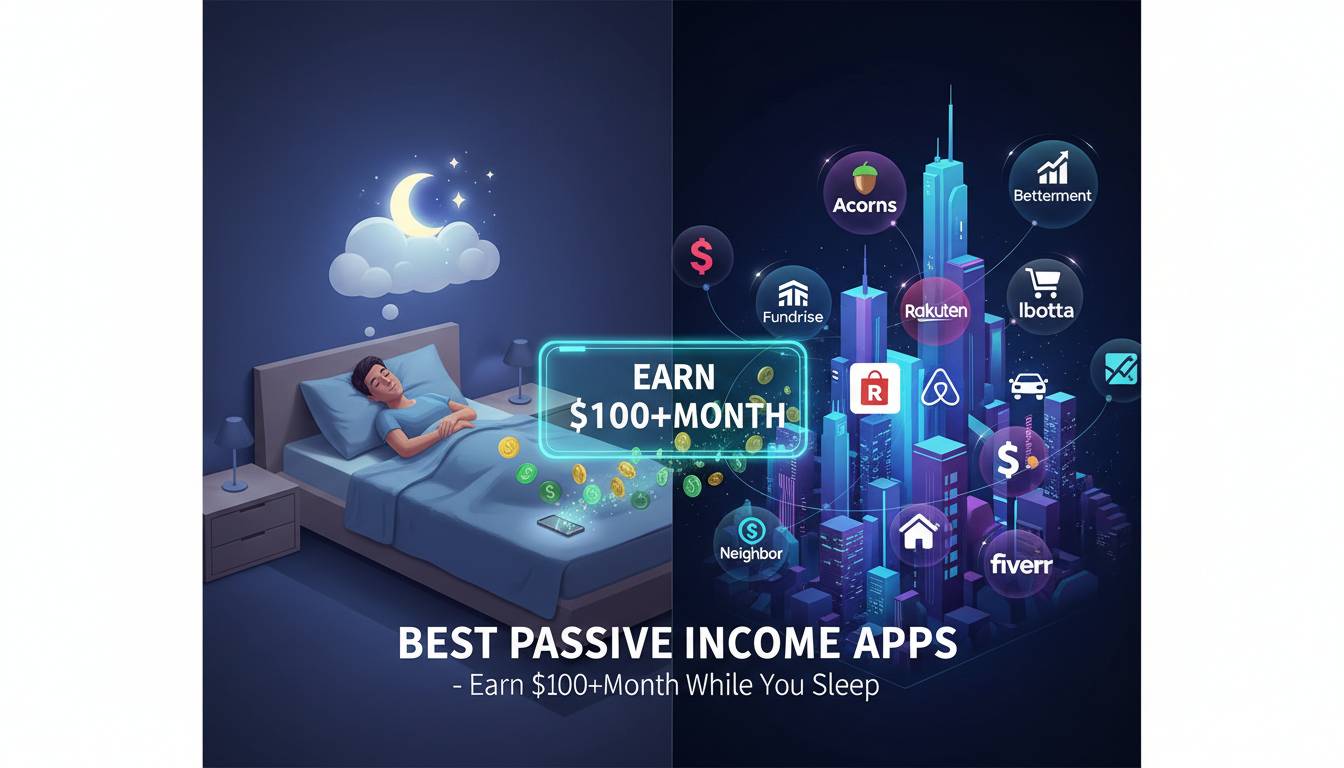
More Americans than ever are looking for ways to make money without trading hours for dollars. Smartphone apps have made it surprisingly easy to generate passive income—whether that’s spare change from coffee purchases or fractions of real estate deals. This guide breaks down what’s actually worth your time, what’s legit, and where you’ll just end up with a bunch of gift cards you’ll never use.
Understanding Passive Income Apps
These apps fall into a few main categories: micro-investing platforms that round up your purchases, cash-back portals that pay you for shopping you were doing anyway, peer-to-peer lending that cuts out the bank, and asset-sharing where you rent out stuff you own.
The mobile investment app market hit around $4 billion in 2023, growing about 25% per year. That’s a lot of people trying to make their phones work for them.
Here’s the thing, though: there’s a big difference between apps that actually generate passive income and ones that just give you a few cents for scanning receipts. The ones that work involve your money actually working—whether that’s invested in the market, lent to borrowers, or earning rental income. The rest are basically glorified coupon apps.
Top Investment and Cash Back Apps
Acorns: Micro-Investing Made Simple
Acorns is probably the most well-known entry point for new investors. The concept is simple: every time you buy something, it rounds up to the nearest dollar and invests the difference. Buy coffee for $4.75, and Acorns invests $0.25.
Three tiers exist: Personal at $3/month, Family at $5/month, and Acorns Later for retirement accounts at $6/month. Returns have historically averaged 7-10% annually, which tracks with broader market performance. The $5 minimum to start makes this accessible for anyone, regardless of how much you have saved.
The app also offers a checking account with early direct deposit and even lets you invest for kids through the Family plan. Acorns launched in 2014 and has gathered over 10 million users—not bad for an app that started by investing your pocket change.
Rakuten: Cash Back on Purchases
Rakuten isn’t an investment app; it’s a cash-back portal. But you can earn decent money from it without risking a dime. Shop through their links at over 3,500 retailers, and you get a cut of the sale. Install the browser extension, and it automatically applies cash back while you shop.
Sign up, make your first $30 purchase, and they send you $30. They’ve paid out over $1 billion in cash back to members since launching in the U.S.
Earnings depend on what you’re buying—some promotions hit 40% cash back, though that’s the exception. For regular online shoppers, $50 to $200 per year is realistic with basically zero extra effort.
Fetch Rewards: Receipt Scanning
Fetch Rewards pays you to scan grocery receipts. You photograph your receipt, the app identifies participating products you bought, and you get points toward gift cards.
It’s one of the most downloaded rewards apps with over 10 million downloads. The earnings are modest—$10 to $30 monthly for most people—but the time investment is basically nothing. You snap a picture and forget about it.
Real Estate Investment Platforms
Fundrise: Democratizing Real Estate
Fundrise lets regular people invest in commercial and residential properties with as little as $10 through their Starter portfolio. It’s one of the few ways to get into real estate without having to buy a whole building.
Since 2010, they’ve handled over $7 billion in real estate deals. Returns come from property appreciation and rental income, historically ranging from 5% to 8% annually depending on the specific fund.
One important catch: this isn’t like buying REITs on the stock market. You can’t sell daily. Plan to keep your money in for at least 3-5 years, or you’ll pay early redemption penalties. Liquidity matters, and Fundrise is definitely not liquid.
CrowdStreet: Commercial Real Estate
CrowdStreet targets commercial real estate—office buildings, apartment complexes, development projects. The minimum is usually $25,000 per deal, so this is aimed at people with serious capital.
Over $4 billion in transactions, more than 150,000 investors. Historical returns run 15% to 25% on successful projects—but “successful” is doing a lot of work in that sentence. Projects get delayed. Tenants leave. Markets turn. These are real risks, not line items in a prospectus.
CrowdStreet does their homework on each deal, but they don’t guarantee anything. Read the risk factors carefully before committing any money.
Peer-to-Peer Lending Platforms
Prosper: Personal Loans Investment
Prosper connects borrowers directly with individual investors. You buy portions of personal loans and get monthly payments with interest. Since 2005, they’ve facilitated over $20 billion in loans.
Returns range from about 3% to 8% annually depending on the risk level you choose. Borrowers get rated from AA (safest) to HR (high risk). Higher risk means higher potential returns—but also higher chance of defaults.
The automated investment tools help you spread money across many loans without having to hand-pick each one. This matters because defaults happen, and diversification is your friend.
Upstart: AI-Powered Lending
Upstart uses artificial intelligence to evaluate borrowers. Their system looks at factors beyond traditional credit scores, potentially finding creditworthy borrowers that other platforms miss.
Over $30 billion in loans originated since 2014. Historical investor returns average 5-8% annually. They offer personal loans and auto refinancing through their rate platform.
Same warning applies here: defaults happen, especially during economic downturns. Spread your money across plenty of loans to smooth out the losses.
Passive Income Through Asset Sharing
Turo: Car Rental Platform
Turo lets you rent your car to others when you’re not using it. Available in over 5,500 cities in the U.S., Canada, and the UK.
Earnings depend heavily on your vehicle, location, and how often it’s available. In high-demand areas with desirable cars, owners can make $500 to $1,000 monthly. Turo takes 10-25% depending on which protection plan you choose.
They handle insurance during rentals—read the details carefully though. You’re still responsible for maintenance, and your insurance costs might go up. Plus there’s depreciation to consider.
Airbnb: Short-Term Rentals
Airbnb isn’t passive income in the true sense. There’s real work involved: setting up the space, communicating with guests, managing cleaning, dealing with the occasional nightmare guest. But for people with spare rooms or empty properties, the income potential is significant.
Average U.S. hosts earn around $900 monthly, though that varies enormously by location. Tourist destinations and business travel hubs command premium rates.
Local laws matter—a lot of cities have restrictions on short-term rentals. Check your regulations before diving in. Some hosts hire property managers to handle the day-to-day, which eats into profits but also reduces the headaches.
Risk Assessment and Considerations
Let’s be honest about risk. Investment apps don’t guarantee anything—your money can go down. Promotional materials love to emphasize the upside, but the downside exists too.
Regulatory oversight varies. Acorns and Fundrise fall under SEC oversight as investment platforms. Cash-back apps operate under different consumer protection rules. Know which agency watches over your chosen platform.
Liquidity matters more than most people realize until they need their money. Fundrise and CrowdStreet lock you in for years. Robinhood lets you sell instantly. Don’t commit money to illiquid investments that you might need access to.
Taxes: yeah, you have to pay them. Investment gains, rental income, even some rewards points can be taxable. If you make enough to worry about it, talk to a tax professional. If you make a little, just track your 1099s and don’t ignore them.
Maximizing Your Passive Income Strategy
Don’t put all your eggs in one basket. Mix platforms to spread risk and increase total earnings.
Start with the zero-risk options—Rakuten and Fetch Rewards give you immediate returns without any money at stake. Use these to get comfortable with the apps, then gradually move into actual investing as you learn more.
Check your portfolio quarterly. Markets change, platforms change, your situation changes. What made sense six months ago might not make sense now.
Here’s my honest take: $100 monthly is doable, but don’t expect to get there overnight or without putting some money in. Cash-back apps alone might get you $20-40 monthly. To hit the full $100, you’re probably looking at combining rewards with investment returns from a few thousand dollars invested. That’s realistic, but it’s not free money.
Frequently Asked Questions
What’s the easiest passive income app to start with?
Rakuten or Fetch Rewards. No money required, no risk, just install the app or browser extension and start earning immediately.
Can you really earn $100 monthly with passive income apps?
Yes, but it typically takes combining multiple approaches. Cash-back apps might get you $10-30. The rest comes from actually investing money—$10,000-15,000 invested at typical returns can add $70-90 monthly. It’s possible, but it requires either time or capital (usually both).
Are passive income apps safe to use?
The big names—Acorns, Fundrise, Rakuten, Turo—are legitimate companies with millions of users and regulatory oversight. That doesn’t mean they’re risk-free. Investment apps can lose your money. Read the terms, understand the fees, and don’t invest money you can’t afford to lose.
How much money do I need to start?
Acorns: $5. Fundrise: $10. CrowdStreet: $25,000. Cash-back apps: $0. The barrier to entry varies enormously, so pick something that matches your financial situation.
Which app has the highest returns?
The highest returns come with the highest risk. Peer-to-peer lending and real estate investing can hit 5-15% returns, but defaults and illiquidity can wipe those out. There’s no such thing as guaranteed high returns—if someone promises 10%+ consistently with no risk, that’s a scam.
Do I need to pay taxes on passive income from apps?
Yes. Investment gains, rental income, and most other passive income is taxable. Platforms that pay you enough will send you a 1099. Keep records and talk to a tax pro if you’re making significant money.
Conclusion
Passive income apps have matured enough that several legitimate options exist for people looking to supplement their income. Acorns makes micro-investing simple. Fundrise opens real estate to anyone with a ten-dollar bill. Cash-back apps like Rakuten pay you for shopping you were doing anyway.
But here’s what nobody talks about: these are tools, not shortcuts. Building real passive income usually requires either money to invest or time to maximize the low-barrier options. The $100 monthly figure gets thrown around a lot, and it’s achievable—but it typically takes a combination of approaches and some patience.
The best path forward probably looks different for everyone. Someone with spare cash should look at Acorns or Fundrise. Someone who shops online anyway should start with Rakuten. Someone with an extra room has Airbnb options. Mix and match based on your situation, and reassess as things change.
The fintech space keeps evolving, and new opportunities will keep appearing. Stay curious, stay skeptical of promises that sound too good, and don’t ignore the boring stuff—fees, taxes, and the occasional trapdoor in the terms of service.