
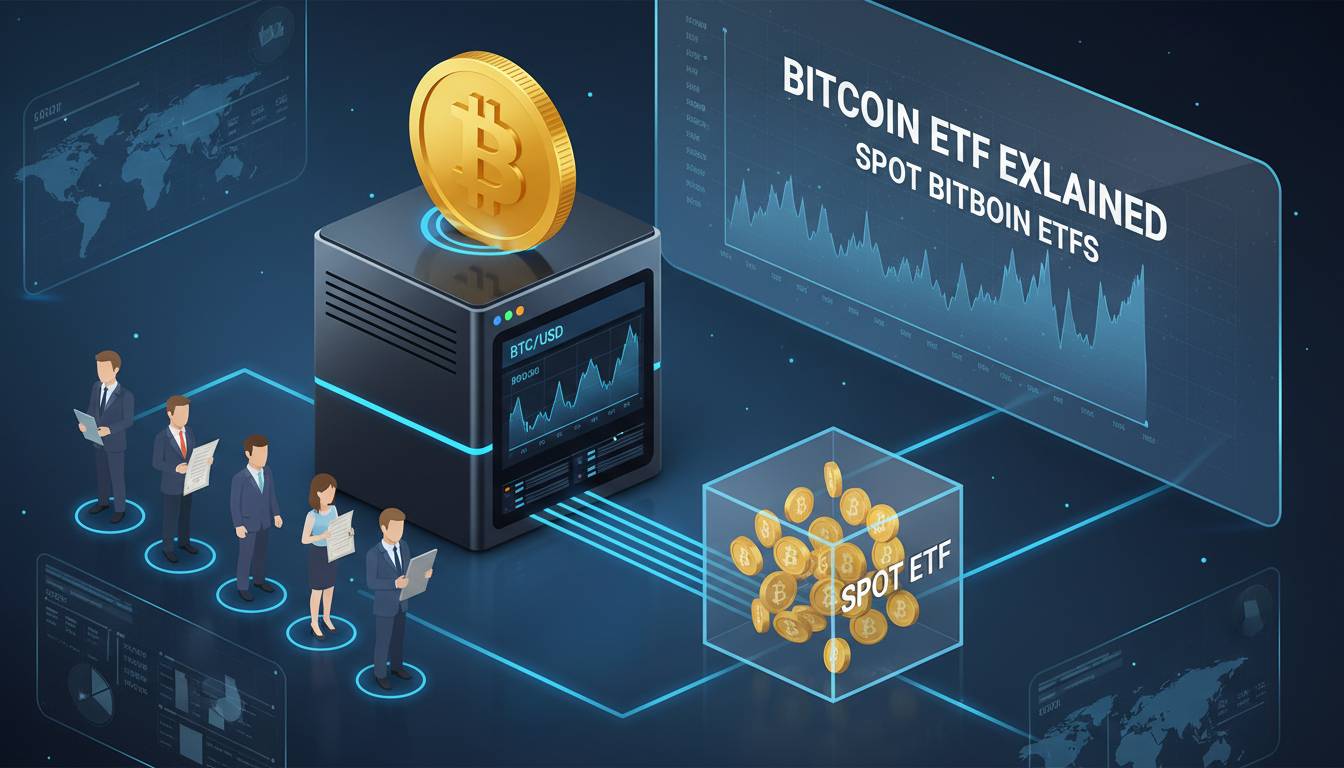
In January 2024, the U.S. Securities and Exchange Commission approved the first spot Bitcoin exchange-traded funds (ETFs). This decision changed how mainstream investors can access Bitcoin—now they could buy it through their regular brokerage accounts, just like stocks or mutual funds. For anyone considering adding cryptocurrency to their portfolio, understanding how these funds work has become genuinely useful knowledge.
What Is a Bitcoin ETF?
A Bitcoin ETF is an exchange-traded fund that holds Bitcoin as its primary asset. When you buy shares, you’re purchasing a security that represents a portion of the fund’s Bitcoin holdings. You get exposure to Bitcoin’s price movements without needing to set up a digital wallet, manage private keys, or handle the technical aspects of cryptocurrency storage.
This matters because direct Bitcoin ownership comes with real responsibilities. You need to secure your private keys, worry about losing access to your wallet, and handle your own security. A Bitcoin ETF outsources all of that to a professional custodian—the fund holds the actual Bitcoin and handles storage, security, and administrative tasks.
There are two main types of Bitcoin ETFs. Spot Bitcoin ETFs, which the SEC approved in 2024, hold actual Bitcoin. Futures-based Bitcoin ETFs existed before that and derive their value from Bitcoin futures contracts rather than the cryptocurrency itself. The distinction matters: spot ETFs provide more direct exposure to Bitcoin’s price and tend to be simpler structurally.
How Does a Bitcoin ETF Work?
The structure involves several parties working together to give investors exposure to Bitcoin while maintaining the operational infrastructure of traditional ETFs.
A sponsor company creates and manages the fund. The sponsor handles establishing the ETF, working with authorized participants (large financial institutions) to create and redeem shares, and ensuring compliance with SEC regulations. When you buy shares of a Bitcoin ETF, you’re purchasing securities that represent fractional ownership of the fund’s Bitcoin.
Authorized participants help keep the ETF’s price in line with its underlying value. These institutions can create new ETF shares by depositing Bitcoin with the fund’s custodian or redeem shares by withdrawing Bitcoin. This mechanism prevents the ETF from trading at significant premiums or discounts to its net asset value—the same system all ETFs use.
Custody is a critical piece. The custodian stores the fund’s Bitcoin using cold storage (offline wallets) and hot storage (online wallets), with institutional-grade security measures including multi-signature technology, geographic distribution of private keys, and insurance coverage. This addresses the security concerns that scare many people away from holding Bitcoin directly.
Benefits of Bitcoin ETFs
Bitcoin ETFs solve real problems that have kept traditional investors out of cryptocurrency.
Accessibility is the biggest draw. Most people already have brokerage accounts through their 401(k), retail trading platforms, or IRA. Bitcoin ETFs let these investors get cryptocurrency exposure without signing up for a cryptocurrency exchange, learning about wallets, or figuring out blockchain technology. The barrier to entry dropped dramatically.
Regulatory oversight adds a layer of protection that direct cryptocurrency ownership lacks. SEC-regulated ETFs must follow strict disclosure requirements, accounting standards, and investor protection rules. You get transparency, sponsor accountability, and the comfort of knowing the investment operates within established legal frameworks.
Portfolio diversification becomes easier. Cryptocurrencies have historically moved independently from stocks and bonds, meaning they can reduce overall portfolio volatility when combined with traditional assets. The ETF structure makes adding this exposure simple—you’re just buying another fund.
Tax convenience matters for many investors. Holding Bitcoin through an ETF means you get standard 1099 tax reporting from your brokerage. This beats tracking cost basis and capital gains across multiple wallets and exchanges, which gets messy quickly.
Risks and Considerations
Bitcoin ETFs aren’t for everyone. Understanding the downsides is just as important as knowing the benefits.
Volatility defines Bitcoin, and it directly impacts ETF shareholders. The cryptocurrency has crashed more than 50% from its peak multiple times. Some traders thrive on this volatility; others find it unbearable. Expect your ETF shares to swing significantly.
Management fees eat into returns. Sponsors charge between 0.25% and 1.50% annually. That doesn’t sound like much, but in a volatile asset class where returns may be inconsistent, these fees compound and matter.
Counterparty risk exists whenever a third party holds assets for you. While custodians use sophisticated security, the failure of a custodian, sponsor, or service provider could impact investors. Spot Bitcoin ETFs are new—they haven’t been tested through a major market downturn or financial crisis yet.
Regulatory uncertainty persists. Future SEC actions, new laws, or shifts in regulatory interpretation could change how these funds operate or whether they’re available at all. The regulatory landscape for cryptocurrency remains fluid.
Recent Developments and Market Performance
Since the SEC approved these funds on January 10, 2024, adoption has been striking. Major issuers launched spot Bitcoin ETFs, including BlackRock, Fidelity, Grayscale Investments, and Ark Invest.
Trading volumes on launch day were enormous—billions of dollars exchanged hands within hours. BlackRock’s iShares Bitcoin Trust (IBIT) quickly became the dominant player, gathering billions in assets within weeks. Fidelity’s Wise Origin Bitcoin Fund also attracted significant interest, helped by the firm’s reputation in traditional finance.
Net inflows have stayed positive since launch. Institutional investors, financial advisors, and regular retail customers have all been putting money into these products. This demand has supported Bitcoin’s price during 2024 and into 2025.
The success influenced other regulatory decisions. The SEC’s approval of spot Ethereum ETFs in 2024 showed willingness to authorize more cryptocurrency-based products, which could lead to additional digital asset ETFs in the future.
How to Invest in Bitcoin ETFs
Adding a Bitcoin ETF to your portfolio requires the same systematic approach you’d use for any investment.
First, make sure your brokerage supports the specific Bitcoin ETF you want. Most major platforms—Fidelity, Charles Schwab, TD Ameritrade, E*TRADE, Robinhood—offer access, but availability varies. Check that your platform actually carries the fund before you try to buy.
Position sizing matters enormously with volatile assets. Financial advisors commonly suggest keeping cryptocurrency allocations small relative to your total portfolio—often under 5%. Even a modest allocation gives you exposure without risking your overall financial security if Bitcoin drops sharply.
For retirement accounts, verify that Bitcoin ETFs are available in your 401(k) or IRA. Some retirement platforms now offer them, but many still restrict cryptocurrency exposure to traditional investments.
Conclusion
Bitcoin ETFs give investors a regulated, familiar way to access Bitcoin through their existing brokerage accounts. The SEC’s 2024 approval opened a new avenue for cryptocurrency investment that doesn’t require navigating crypto exchanges or managing digital wallets.
Whether these funds make sense for you depends on your financial goals, risk tolerance, and view of Bitcoin as an asset. The accessibility and regulatory protections appeal to many investors. But the volatility, fees, and regulatory unknowns are real considerations that shouldn’t be glossed over.
As the cryptocurrency market matures, Bitcoin ETFs will likely remain a primary way traditional investors access this space. Staying informed about how these products work—and being honest about whether you can stomach the volatility—will serve you better than chasing headlines.
Frequently Asked Questions
What is the difference between a Bitcoin ETF and owning Bitcoin directly?
Direct ownership means holding cryptocurrency in your own wallet with control over your private keys. A Bitcoin ETF means owning shares of a fund that holds Bitcoin—you get price exposure without custody or security headaches. The ETF trades on stock exchanges and offers regulatory protections that direct ownership doesn’t.
Are Bitcoin ETFs safe investments?
No. Bitcoin ETFs carry substantial risk because Bitcoin itself is highly volatile and speculative. The ETF structure provides professional custody and regulatory oversight, but the underlying asset remains unpredictable. Only invest money you can afford to lose entirely.
How much does it cost to invest in a Bitcoin ETF?
Expense ratios typically range from 0.25% to 1.50% annually. A 0.25% fee means you pay $2.50 per year for every $1,000 invested. These ongoing costs reduce your returns and should factor into your decision.
Can I hold a Bitcoin ETF in my retirement account?
Yes, Bitcoin ETFs can generally be held in IRAs and 401(k) plans if your brokerage or retirement platform offers them. Not all platforms do—check your specific account options.
What happens if the Bitcoin ETF sponsor goes bankrupt?
Assets held in custody for shareholders are typically protected in bankruptcy. SEC rules require customer assets to be segregated from the sponsor’s corporate assets. Review the prospectus for details on custody arrangements and specific protections.
How do Bitcoin ETFs affect Bitcoin’s price?
ETF approval made it easier for institutional investors to buy Bitcoin, which has supported prices through sustained demand. More people can now access Bitcoin through familiar brokerage accounts. However, Bitcoin’s price still depends on many factors beyond ETF flows—regulation, macro conditions, and market sentiment all play roles.