
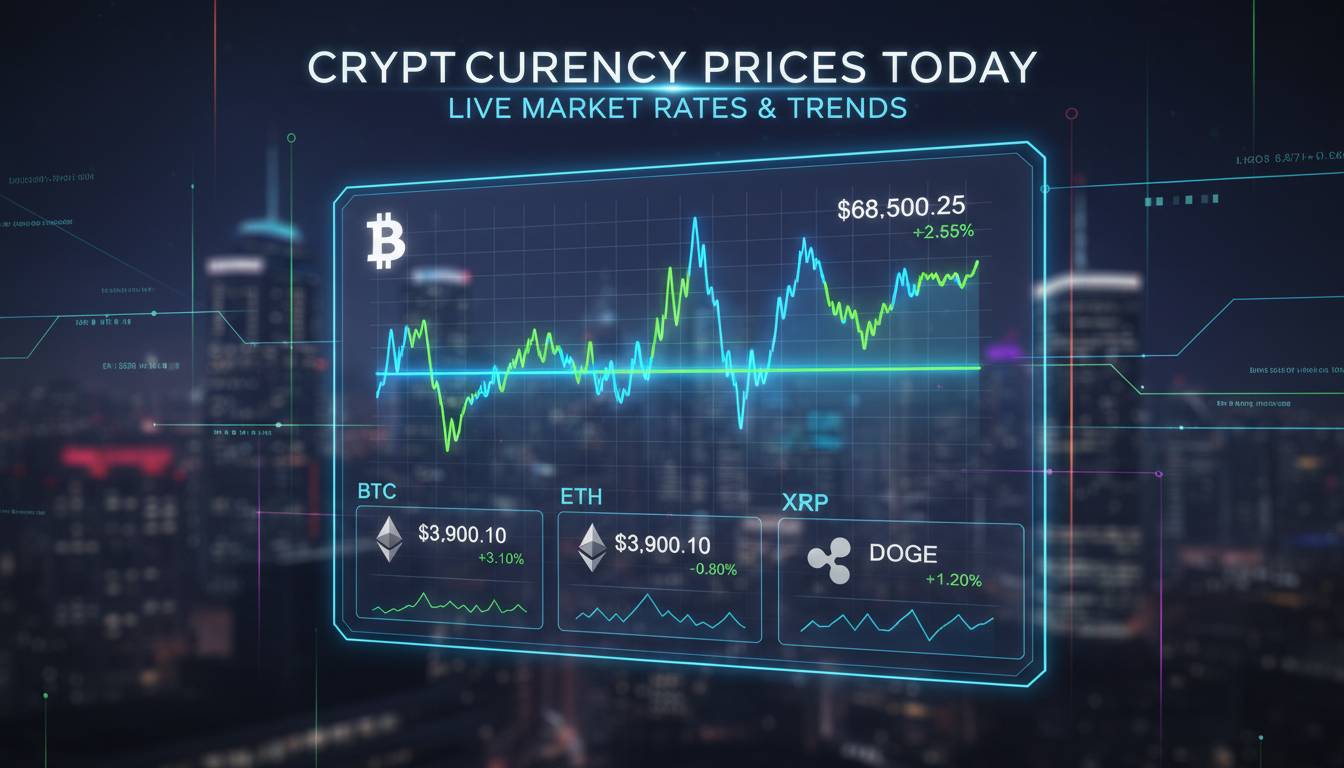
The crypto market is doing that thing it always does—swinging wildly while everyone argues about what’s next. Today’s action shows Bitcoin ETF optimism battling it out with broader concerns about interest rates and risk assets in general.
Current Market Overview
Market cap is the big number everyone watches: total value of all cryptos in circulation. Traders also keep an eye on volume to see who’s actually buying and selling. The market’s been bouncing around lately as macro worries weigh on people.
Bitcoin and Ethereum still dominate everything. When they move, altcoins follow. These days, crypto moves pretty similarly to stocks—both react to Fed policy news and what the S&P 500 is doing.
DeFi protocols are still handling serious trading volume. People are lending, borrowing, and chasing yields through decentralized exchanges. It’s not just about buying and holding anymore.
Bitcoin Price Dynamics
Bitcoin is still the benchmark. Analysts call it “digital gold,” which either makes sense or sounds ridiculous depending on who you ask.
Institutional money has changed the game. Regulated investment products mean actual Wall Street firms can buy in without figuring out how to store crypto themselves. This has made the market more mature, though whether that’s actually reduced volatility is debatable.
Mining matters too. The network’s hash rate shifts based on profitability and energy costs, which affects supply. Serious traders watch this stuff.
Ethereum and Altcoin Performance
Ethereum is still the biggest smart contract platform, and its move to proof-of-stake was a big deal—both for environmental reasons and because staking yields gave holders another way to make money.
Altcoins are all over the place. Layer-2 solutions are getting attention as developers try to solve the blockchain trilemma (decentralization, security, scalability—pick two). Some of these projects will matter in five years; most won’t.
And then there are the meme coins. Some are jokes that got lucky. Others are just speculation with extra steps. Worth being honest about that.
Regulatory Landscape
Regulation is a huge deal for this market. SEC decisions on ETFs and exchange listings affect how big players can participate. Whether something is a security or a commodity is still blurry, and that matters a lot.
Internationally, things are slowly getting more coordinated. The EU’s MiCA framework is probably the most comprehensive approach so far—clear rules, some consumer protections.
Taxes are more complicated now. Most countries treat crypto as capital gains property, which means keeping records of every trade. People sleep on this and get in trouble come tax season.
Market Sentiment and Technical Analysis
The Fear and Greed Index tries to measure how the market feels—fearful or greedy. Extreme readings sometimes signal reversals, though good luck timing it.
Traders use all the usual tools: moving averages, RSI, volume. But crypto’s short history means historical patterns don’t always hold. The fundamentals are weird too.
On-chain data helps. Wallet activity, exchange flows, network usage—these show what’s actually happening versus just price movements.
Investment Considerations
Crypto is volatile. That should go without saying, but it needs saying. Don’t put in more than you can afford to lose. Diversification helps, though crypto’s correlation with stocks has been increasing lately, which defeats some of the diversification benefit.
Dollar-cost averaging is popular for a reason—it takes the timing pressure off. Just invest regularly and don’t check the price every hour.
Security matters. Hardware wallets are the safest for big holdings. Exchanges are convenient but introduce counterparty risk. Know the tradeoffs.
Future Outlook
Where this goes depends on tech development, regulation, and the broader economy. Institutional adoption will probably keep growing. More regulated products means more traditional finance involvement.
Tech keeps evolving—zero-knowledge proofs, decentralized identity, cross-chain stuff. Some of it will matter. A lot won’t.
Macroeconomy will keep affecting things. How crypto performs through different economic conditions will define its long-term role in portfolios.
Conclusion
Crypto moves fast and catches people off guard. The regulatory picture is slowly clarifying, institutions are getting more involved, and the technology keeps advancing. Volatility isn’t going away, but the space has matured. Do your own research, manage risk, and don’t invest based on what someone said on Twitter.
Frequently Asked Questions
What determines cryptocurrency prices?
Supply and demand. That’s the core of it—trading volume, sentiment, news, macro conditions, and project fundamentals all push that balance around. Unlike stocks, cryptos don’t have earnings or assets to anchor value, so price swings can get extreme.
How often do cryptocurrency prices update?
Prices move constantly during market hours. Aggregators like CoinMarketCap pull from dozens of exchanges. You’ll see small differences between platforms because of different trading pairs and liquidity.
Should I invest in cryptocurrency today?
Depends on your situation. High volatility, high risk. Only use money you won’t need. Maybe talk to a financial advisor first.
Which cryptocurrency should I buy first?
Bitcoin and Ethereum are the most established—biggest market caps, most liquid. New investors usually start there. After that, it depends on what you’re actually trying to do.
How do I track cryptocurrency prices in real-time?
CoinMarketCap, CoinGecko, TradingView—all have real-time data. Most exchanges show live prices too. Mobile apps make it easy to check anywhere.
Are cryptocurrency prices the same on all exchanges?
No, but they’re close. Differences in trading pairs and regional demand create small gaps. Arbitrage exists but rarely works profitably for regular people after you account for fees and transfer time.