
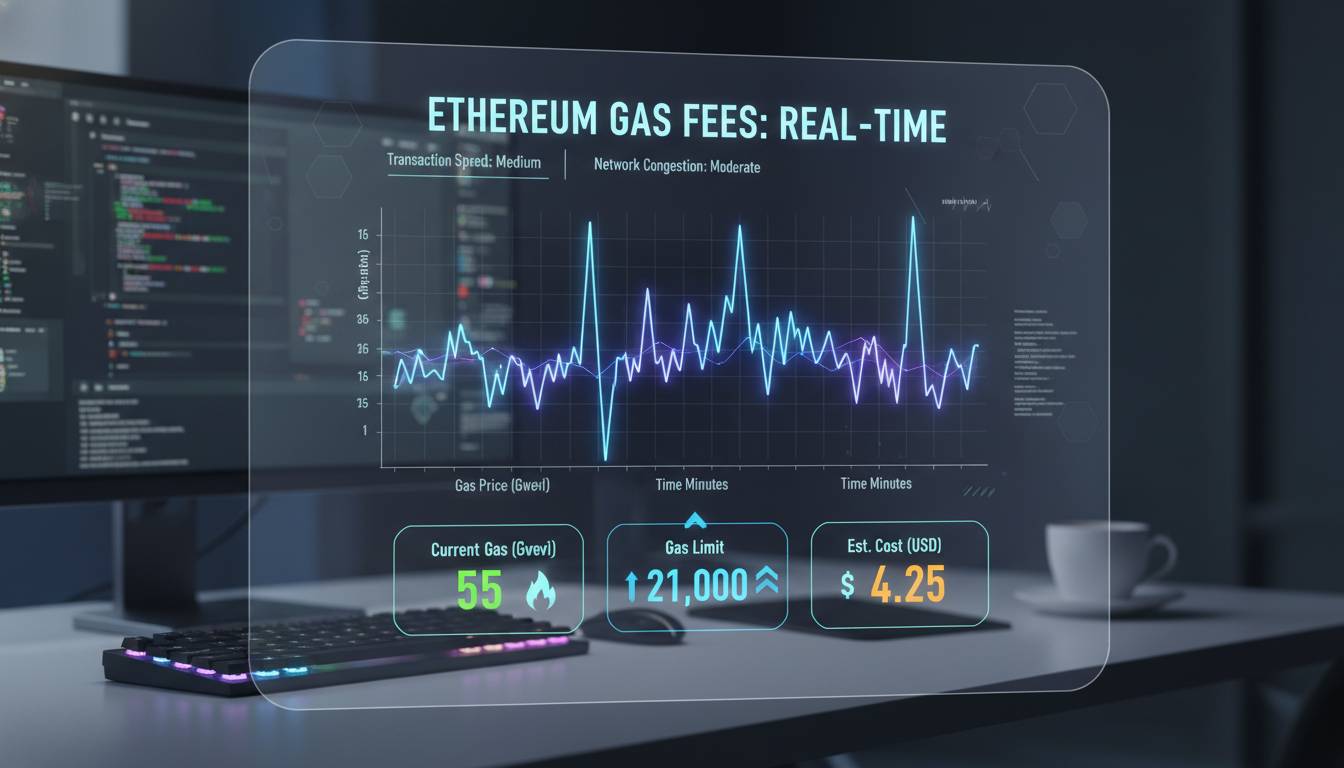
Ethereum gas fees represent one of the most significant ongoing costs for users interacting with the blockchain. Whether you’re transferring ETH, swapping tokens on decentralized exchanges, or interacting with smart contracts, these transaction fees can sometimes exceed the value of the transaction itself. Understanding how gas fees work and implementing strategic approaches to minimize them can save users substantial amounts of money over time.
This comprehensive guide explores the mechanics behind Ethereum gas fees, examines the factors that drive costs higher, and provides actionable strategies to reduce your transaction expenses. These insights come from analyzing real-world blockchain data, user experiences, and established practices within the Ethereum community.
What Are Ethereum Gas Fees and How Do They Work
Ethereum gas fees represent the computational effort required to execute operations on the Ethereum network. The term “gas” functions as a metaphor for the fuel that powers these computations, with each transaction or smart contract operation consuming a specific amount of gas based on its complexity.
The Ethereum network uses a two-component fee structure. The first component is gas limit, which refers to the maximum amount of gas you’re willing to spend on a transaction. The second component is gas price, which represents the amount you’re willing to pay per unit of gas. Your total transaction fee equals gas limit multiplied by gas price.
When you submit a transaction to the Ethereum network, validators (previously miners) prioritize transactions based on the gas price offered. Higher gas prices incentivize validators to include your transaction in the next block faster. This creates a market-driven approach where users compete for block space by offering different gas prices.
The introduction of Ethereum Improvement Proposal 1559 in August 2021 fundamentally changed how gas fees work. Under this upgrade, the network now uses a base fee that automatically adjusts based on network demand, combined with a priority fee (tip) that users can add to incentivize faster confirmation. A portion of these fees gets burned, removing ETH from circulation permanently, which has created ongoing deflationary pressure on the cryptocurrency.
Factors That Affect Ethereum Gas Fees
Understanding what drives gas fees higher or lower helps users make informed decisions about when and how to transact.
Network Demand and Congestion
The primary factor affecting gas fees is overall network demand. When more users attempt to transact on Ethereum simultaneously, competition for limited block space intensifies, driving gas prices upward. During periods of high activity such as popular NFT drops, major protocol launches, or market volatility, gas fees can spike dramatically. On the other hand, during low-activity periods, particularly on weekends or late night hours in the United States, gas fees typically decrease significantly.
Ethereum blocks can process only a limited number of transactions, creating inherent capacity constraints. The network targets approximately 15 transactions per second under normal conditions, but demand often exceeds this capacity, especially during peak usage periods.
Time of Day and Day of Week
Geographic patterns significantly influence gas fees. Since a large portion of Ethereum activity originates from users in North America and Europe, gas prices tend to be highest during business hours in these regions. Early morning hours in the United States, typically between 2 AM and 6 AM Eastern Time, often see the lowest gas prices as Asian markets dominate activity and European and American users are less active.
Weekends generally experience lower gas prices compared to weekdays, as institutional activity and regular trading volume decreases. Sunday mornings in the US often represent some of the cheapest times to transact.
Transaction Complexity
Not all transactions require the same amount of gas. Simple ETH transfers between wallets consume approximately 21,000 gas units. However, interactions with decentralized exchanges, NFT marketplaces, or complex smart contracts can consume significantly more gas, sometimes exceeding 500,000 or even millions of gas units for particularly complex operations.
Token transfers typically require around 65,000 to 85,000 gas units, while swaps on Uniswap or similar DEXes often consume 150,000 to 300,000 gas units depending on the number of tokens being exchanged and slippage tolerance settings.
Smart Strategies to Reduce Ethereum Gas Fees
Timing Your Transactions Strategically
The most effective strategy for reducing gas fees involves transacting during off-peak hours. Based on analysis of historical gas data, the cheapest periods typically occur between midnight and 6 AM Eastern Time, particularly on Saturday and Sunday mornings.
Using gas tracking websites like Etherscan’s Gas Tracker, Gas Now, or Ultrasound.money allows you to monitor current network conditions before initiating transactions. These tools provide real-time data on gas prices measured in gwei (one billionth of an ETH), helping you identify optimal transaction windows.
Planning ahead proves essential for non-urgent transactions. If you can wait several hours or days for a transaction to confirm, setting a lower gas price and allowing the transaction to wait in the mempool (the waiting area for unconfirmed transactions) can result in substantial savings.
Adjusting Gas Settings Manually
Most wallet interfaces offer options to customize gas settings rather than accepting default recommendations. By manually setting your gas price lower than the recommended amount, you can save significantly on fees, though this comes with the trade-off of potentially longer confirmation times.
For non-urgent transactions, setting your max priority fee to the minimum (or near-zero) and allowing the base fee to determine total costs can work well. The transaction will eventually confirm once network activity decreases and the base fee drops.
Using advanced settings in wallets like MetaMask allows you to set a max gas fee and max priority fee separately, giving you precise control over maximum spending while potentially benefiting from lower base fees that may occur during your transaction wait time.
Batching Transactions Efficiently
When possible, combining multiple operations into single transactions reduces overall costs. Rather than making several separate token transfers, consider batching them if the protocol supports multi-call functions. Some DeFi protocols and wallets offer batch transaction features that execute multiple actions within a single transaction, saving substantial gas compared to executing each action separately.
For NFT collectors, minting during primary sales rather than purchasing on secondary markets often incurs lower fees, though this requires understanding the specific minting mechanics and timing of each project launch.
Using Layer-2 Solutions
Ethereum’s Layer-2 scaling solutions offer dramatically lower transaction fees while maintaining security guarantees from the main Ethereum network. Arbitrum, Optimism, and Base have become popular choices for users seeking to minimize costs while remaining within the Ethereum ecosystem.
These rollup solutions batch multiple transactions together and submit them to Ethereum mainnet as a single transaction, dramatically reducing per-user costs. Many DeFi protocols, NFT marketplaces, and gaming platforms now operate on these Layer-2 networks, with some transactions costing less than a dollar compared to tens or hundreds of dollars on mainnet.
The trade-off involves bridging assets to and from Layer-2 networks, which incurs mainnet gas fees. Users who plan to make multiple transactions often find that the savings from numerous low-fee Layer-2 transactions far outweigh the initial bridging costs.
Tools and Resources for Managing Gas Fees
Several tools help users monitor and optimize their gas spending. Etherscan provides comprehensive gas tracking with historical data showing average gas prices over various time periods. Gas Now offers a gas price oracle that predicts optimal gas settings based on current network conditions, providing recommendations for slow, standard, and fast confirmations.
Wallet extensions and mobile apps increasingly incorporate gas optimization features. Some wallets automatically suggest gas settings based on current network conditions, while others allow users to set alerts for when gas prices drop below certain thresholds.
For DeFi users, the 1inch aggregator automatically attempts to optimize gas costs when executing swaps, finding routes that minimize total transaction costs. Similarly, some lending protocols allow users to optimize their collateral management transactions to reduce gas costs associated with depositing, withdrawing, or managing positions.
When Higher Gas Fees Make Sense
Sometimes paying higher gas fees proves worthwhile despite the additional cost. Time-sensitive transactions such as participating in competitive NFT mints, liquidating positions before liquidation thresholds, or capturing time-sensitive trading opportunities may justify premium gas prices.
Understanding your transaction’s urgency helps determine appropriate gas spending. A transaction that must confirm immediately warrants higher gas prices, while routine transfers or DeFi positions that can wait hours or days benefit from patience and lower gas settings.
Frequently Asked Questions
Why are Ethereum gas fees so high right now?
Ethereum gas fees remain elevated primarily due to persistent network demand that often exceeds the blockchain’s throughput capacity. With thousands of decentralized applications, millions of users, and various token standards competing for limited block space, competition drives gas prices upward. The popularity of DeFi, NFTs, and blockchain gaming continues to strain network capacity, particularly during peak activity periods.
Will Ethereum gas fees ever decrease permanently?
While Ethereum has implemented upgrades like EIP-1559 to improve fee efficiency, and continues developing through Ethereum 2.0 (the Merge and subsequent upgrades), permanent significant fee reduction depends largely on Layer-2 adoption and future scaling solutions. Proto-danksharding introduced in 2024 added more data-blob capacity to reduce Layer-2 costs significantly. However, base-layer transaction costs may remain high unless further scaling improvements are implemented.
Should I use a Layer-2 network instead of Ethereum mainnet?
Layer-2 networks make sense for most regular users who transact frequently or move smaller amounts. If you’re making multiple swaps, NFT purchases, or DeFi interactions, Layer-2 solutions like Arbitrum, Optimism, or Base can reduce costs by 90% or more. The mainnet remains appropriate for very large transactions, high-value NFT trades, or interactions with protocols that haven’t deployed to Layer-2 networks.
How do I set optimal gas fees on MetaMask?
In MetaMask, you can access advanced gas settings by clicking on the gas fee indicator and selecting “Advanced.” Here you can set your Max Priority Fee (tip to validators) and Max Fee (total maximum you’re willing to pay). For non-urgent transactions, setting a lower max priority fee and allowing more time for confirmation can reduce costs. Always check current gas prices on tracking websites and set your max fee slightly above the current base fee to account for potential increases.
What is the difference between gas limit and gas price?
Gas limit represents the maximum computational work you’re authorizing for your transaction, essentially a budget for how complex the operation can be. Gas price represents the amount you pay per unit of computational work. Your total fee equals gas limit multiplied by gas price. Unused gas from your limit gets refunded after execution, but if you set your limit too low, the transaction fails without refund.
Can I cancel an Ethereum transaction to avoid high gas fees?
If your transaction remains pending in the mempool, you can sometimes cancel it by submitting a new transaction with the same nonce (transaction number) but with a higher gas price. Most wallets allow you to “speed up” a pending transaction, which effectively cancels the original by outcompeting it. However, once a transaction is confirmed on the blockchain, it cannot be reversed or canceled.
Conclusion
Reducing Ethereum gas fees requires understanding the underlying mechanics and implementing strategic approaches to your transaction habits. Timing transactions during off-peak hours, utilizing Layer-2 solutions for frequent activities, manually adjusting gas settings, and batching when possible can collectively save users significant amounts over time.
The Ethereum ecosystem continues evolving, with ongoing upgrades aimed at improving scalability and reducing costs for users. Staying informed about network conditions, available tools, and emerging solutions positions you to minimize expenses while continuing to participate in the broader Ethereum ecosystem. By treating gas fees as a manageable expense rather than an unavoidable cost, you can optimize your blockchain activities to achieve better overall results.