
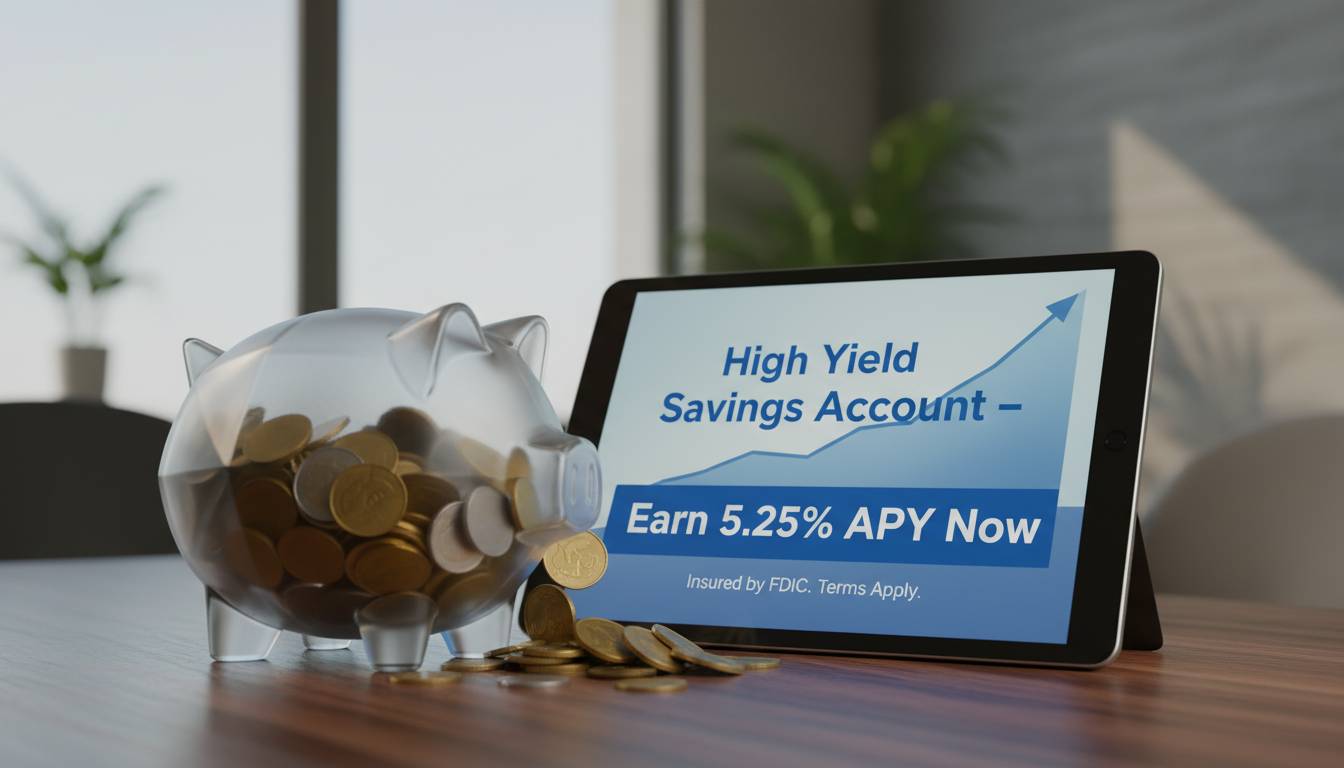
With interest rates fluctuating and traditional banks offering almost nothing on savings, high yield savings accounts have become a practical way to earn meaningful returns on cash you don’t need immediately. Some accounts now pay over 5% APY—roughly 100 times what major brick-and-mortar banks offer. This guide covers what you need to know about these accounts, from current rates to potential drawbacks.
Understanding High Yield Savings Accounts
A high yield savings account pays a significantly higher interest rate than a typical savings account at a traditional bank. Big national banks currently offer around 0.01% to 0.05% APY. Online banks and credit unions regularly advertise 4.50% to 5.25% or more. On a $10,000 balance, that difference amounts to roughly $500 per year versus $5.
Online banks can offer better rates because they have lower operating costs. They don’t maintain hundreds of branch locations, which means they can pass those savings along to customers. They also have to compete harder for deposits in a market where customers can compare rates with a few clicks.
Federal law limits withdrawals from savings accounts to six per statement cycle under Regulation D. This applies to all savings accounts, not just high yield ones, so it’s not a disadvantage unique to these products.
Current Market Rates and Top Account Offerings
As of early 2025, several online banks offer rates between 5.00% and 5.25% APY. This far exceeds the national average of about 0.45% APY for regular savings accounts. Leading providers include Marcus by Goldman Sachs, Ally Bank, Synchrony Bank, Capital One, and Discover Bank. Most require no minimum deposit to open an account.
| Institution | APY | Minimum Deposit | Key Features |
|---|---|---|---|
| Marcus by Goldman Sachs | 4.40% | $0 | No fees, good customer service |
| Ally Bank | 4.25% | $0 | 24/7 support, mobile app |
| Synchrony Bank | 4.75% | $0 | ATM access, cash deposits |
| Capital One | 4.35% | $0 | Large ATM network |
| Discover Bank | 4.30% | $0 | Cashback rewards on some accounts |
Rates change frequently. Check with the bank before opening an account.
Is a High Yield Savings Account Worth It?
For most people, yes. The math is straightforward: $10,000 at 5% APY earns about $500 per year. The same money at 0.05% earns $5. That’s a real difference.
Beyond the interest, online banking platforms typically offer useful features like automatic savings tools, goal tracking, and budget integration. These can help you build better financial habits.
That said, consider your own situation. If you need to visit a branch regularly or keep very small balances, the convenience of your current bank might matter more than the extra interest. If you have significant savings and don’t need the money soon, you might get better returns with CDs or treasury securities.
What Are the Disadvantages of High Yield Savings Accounts?
The main drawback is that rates are variable. Unlike CDs, which lock in a rate for a term, high yield savings rates go up and down with the economy and Federal Reserve policy. Rates have been strong recently, but they can drop.
Many high yield providers are online-only. If you prefer banking in person, particularly for cash deposits, this can be inconvenient. Most online banks offer good customer service by phone and chat, but there’s no branch to walk into.
The six-withdrawal limit per cycle can also be restrictive if you need frequent access to your money. Some accounts charge fees for going over the limit or if your balance drops below a minimum. Read the fee schedule before signing up.
How Much Should I Put in a High Yield Savings Account?
This depends on your goals. A common recommendation is to keep three to six months of living expenses in an easily accessible account for emergencies. High yield savings work well for this since you can withdraw without penalty (within the six-transaction limit) while earning interest.
For short-term goals—vacations, home repairs, car purchases within one to three years—high yield savings are also a good fit. You earn more than you’d get in a regular savings account while keeping the money accessible.
For longer-term goals, consider whether higher-return investments make more sense. The right vehicle depends on your timeline and risk tolerance.
Are High Yield Savings Accounts Safe?
FDIC insurance covers these accounts just like traditional savings accounts. The FDIC protects up to $250,000 per depositor, per institution, per ownership category. If a bank fails, you get your principal and accrued interest up to that limit.
Legitimate banks display the FDIC membership emblem. You can verify coverage using the FDIC’s BankFind tool. This protection applies equally to high yield and regular savings products.
Reputable online banks also use standard security measures: multi-factor authentication, encryption, and fraud monitoring. While nothing is 100% secure, these accounts are quite safe for money you want to keep accessible while earning interest.
How to Open a High Yield Savings Account
The process is simple and usually takes minutes. Start by comparing options—look at rates, fees, minimum deposits, and features. Once you’ve chosen a bank, you’ll provide personal information including your Social Security number, ID, address, and employment details. Most banks verify your information instantly and approve accounts within minutes.
Funding your account can be done via electronic transfer from an existing bank account, wire transfer, or mobile check deposit. Some banks offer sign-up bonuses for new customers. Once funded, your money starts earning interest—usually compounded daily and paid monthly.
Conclusion
High yield savings accounts offer a straightforward way to earn significantly more on cash you don’t need immediately. With rates above 5% at many institutions, federal insurance protection, and easy online access, they make sense for emergency funds, short-term savings goals, and cash you’re holding before investing.
That said, think about your own needs. Rate fluctuations, online-only banking, and transaction limits might matter more to some people than others. For most savers who want safety, easy access, and competitive returns, high worth considering. Do some research, compare current rates, and pick an account that fits your situation.
Frequently Asked Questions
What’s the difference between a high yield savings account and a regular savings account?
Mainly the interest rate. High yield accounts typically pay 4% to 5%+ APY, while regular accounts at big banks often pay under 0.10%. The difference comes from online banks’ lower operating costs.
Do high yield savings accounts have monthly fees?
Many don’t, especially those from online banks. Some charge fees for excessive transactions or low balances. Check the fee schedule before opening an account.
How often do rates change?
Anytime, really. They move with the economy and Fed policy. Unlike CDs, there’s no fixed rate. But competitive pressure usually keeps rates in line with the broader market.
Can I have multiple high yield savings accounts?
Yes. You can open accounts at several banks. This can help you organize savings toward different goals and maximize FDIC coverage.
Do I need a minimum balance to earn interest?
It varies. Many accounts let you start with $0. Others require a minimum deposit or ongoing balance. Check the terms.
How quickly can I access my money?
Transfers to external accounts typically take one to three business days. Some banks offer instant transfers to linked accounts or ATM access. Availability varies by institution.