
Introduction
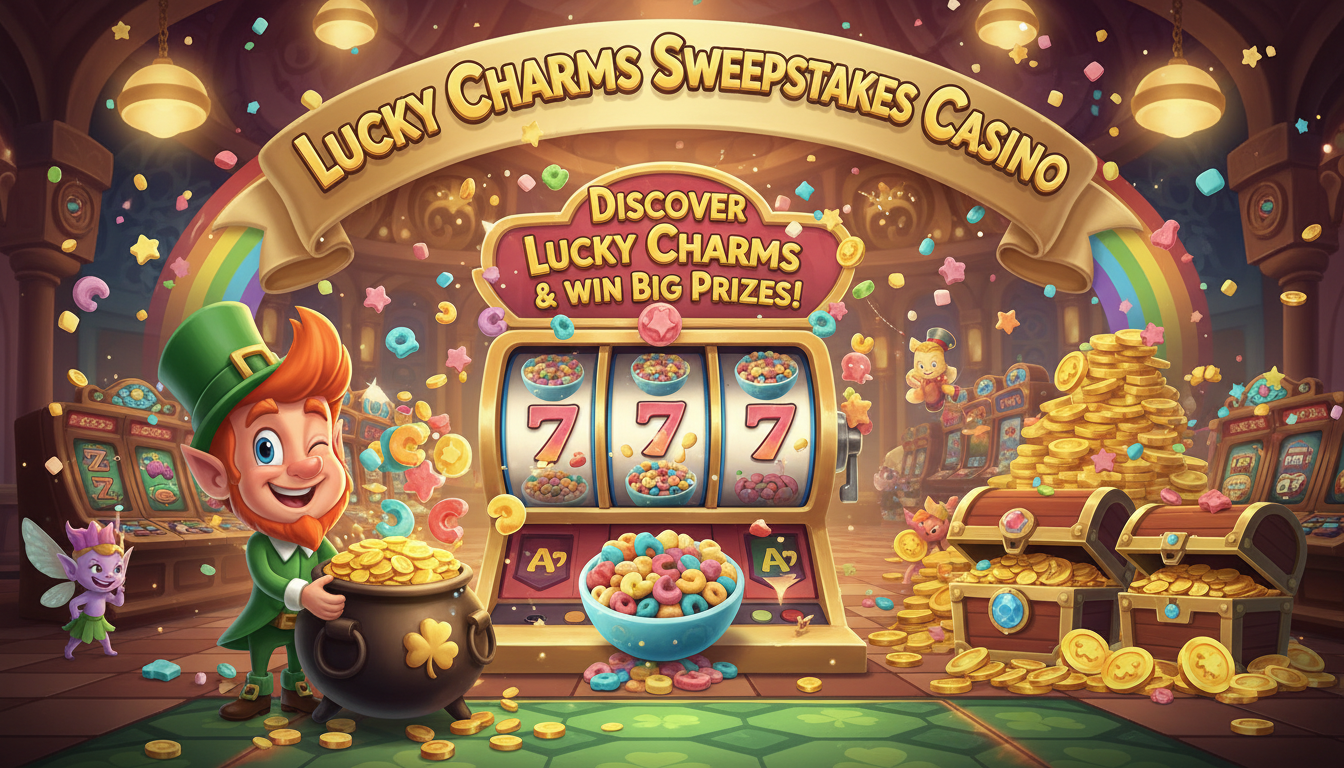
Lucky Charms Sweepstakes Casino offers a mix of whimsical fun and the thrill of winning — when you find your “Lucky Charms” within their sweepstakes-style games, you can indeed win big prizes. The concept is straightforward: dig through themed games, uncover special lucky symbols, and earn entries to prize drawings or instant rewards. It’s a playful spin on casino-style entertainment without real-money betting, making it accessible and appealing to many.
A whimsical twist on digital sweepstakes entertainment
Lucky Charms Sweepstakes Casino isn’t a traditional casino—it’s more like a themed sweepstakes playground with slots, instant‑win games, and scratch-off style options. Beyond just spinning reels, these games embed “Lucky Charms” symbols—think four-leaf clovers, horseshoes, or magical mascots—that double your chances or award bonus entries.
This structure appeals for a few reasons:
– Players seek low-barrier engagement—there’s often no direct purchase of play tokens, instead you gather entries through social actions, small fees, or partner offerings.
– Theming drives emotional connection—Lucky Charms taps into nostalgia and positivity, making players feel lucky, even before the reward.
– It’s legally approachable in many jurisdictions since it’s technically sweepstakes-based, not real-money gambling.
That said, effectiveness depends on clever game design and transparency—players should clearly grasp odds, frequency of “Lucky Charms,” and how likely they are to win.
Design strategy: gamification meets sweepstakes rules
Understanding the model
At its core, the sweepstakes model lets firms skirt stricter gambling regulations by adding a free‑to‑play route alongside paid acquisitions (like buying tokens). Often:
1. You pay a small fee, or take actions (e.g., follow on social media).
2. You get both “play” tokens and “sweepstakes” entries.
3. You use tokens for games; entries go into prize drawings.
Integrating Lucky Charms into game visuals or mechanics adds a layer of delight that isn’t purely transactional. It’s emotional design at play.
Real-world parallel: casual games with sweepstakes ties
Many free‑to‑play mobile titles use similar hooks. For example, match‑3 games that let you spin a daily wheel with “lucky tokens” granting bonus moves, or slot‑style casual games where you can “find the jackpot symbol” to unlock extra spins or drawing tickets.
In such designs:
– Visual clues (like a glowing charm) nudge players to keep going.
– Reward variety (instant prize vs. drawing entry) sustains interest over time.
– Minimal friction—quick spins, no deposit—lowers drop-off.
Why “Find Your Lucky Charms” resonates emotionally
People love feeling chosen, lucky, or just a little bit special. That tiny dopamine spark when you reveal a charm icon—“Oh hey, I’m scoring something special here”—can keep you spinning or playing.
In fact, behavioral economists note that unpredictable reward schedules (like sporadic “you found a charm!” bonuses) drive repeat engagement. It’s like playing arcade claw machines: you don’t always win, but every near‑miss fuels hope to try again.
Plus, everyday products tap into charm symbols—think cereal mascots, goodluck trinkets—so the emotional resonance is familiar. Winning “charms” feels lighter than chasing big jackpots, more playful, more inviting.
Balancing excitement with ethical transparency
Casino-style or sweepstakes games can feel shady if odds are hidden or winning feels impossibly rare. Ethical design means:
- Clearly stating your odds of winning a drawing, or the rate at which lucky charms appear.
- Showing the real fair‑market value of prizes.
- Making it easy for players to withdraw or claim winnings, or know when entries expire.
- Offering genuinely free ways to collect entries—so players don’t feel forced to pay.
“Trust grows when players understand what they’re signing up for, and when the game feels like fair fun, not hidden tricks.”
That quote highlights the need for clarity. Even whimsical games don’t function well if people feel tricked. Trust and replayability go hand‑in‑hand.
Structuring your Lucky Charms Sweepstakes campaign for impact
Whether you’re designing or evaluating a campaign, these steps help bring clarity and engagement:
1. Define the charm mechanics clearly
- Is there one charm per spin, or multiple?
- What effect does each charm have—extra entries, bonus plays, instant rewards?
- How visible are charm triggers? (Big flashing icons help—you want that joy moment.)
2. Balance frequency and prize structure
- Frequent small wins keep momentum going.
- Occasional larger prize drawings offer bigger payoff dreams.
- Prize tiers should feel achievable even if rare.
3. Create entry pathways that feel fair
- Allow players to earn free entries through varied touchpoints (e.g. referral codes, social engagement, limited daily log-ins).
- Paid entry options should feel optional, not mandatory.
4. Communicate clearly
- Provide a simple “How to play” walkthrough.
- Display odds and prize counts transparently in a rules section.
- Let players see their entry history and upcoming opportunities.
5. Iterate based on user feedback
- Collect data on charm discovery rates, redemption rates, complaints.
- Run A/B tests: try charm icons in different colors, note which drive clicks.
- Survey players—are charms exciting? Confusing? Rewarding?
Mini case: “Clover Spin”—a sample scenario
Imagine a sweepstakes game called “Clover Spin.”
A player gets 5 free spins per day. Each spin has a chance to land a clover icon, which grants:
– 1 extra spin
– Entry into a weekly drawing for a plush toy or gift card
Rather than just random icons, clovers glow when they’re close to appearing. One user notes: “I almost wanted to time my clicks to when the reel pulsed green—that little tease felt like a special moment.”
Over time, players stick around to catch the clover even if they don’t win drawing prizes—they hope to! That tiny moment of illusionary control boosts retention more than just saying “you might win.”
Measuring the success of your Lucky Charms sweepstakes
Key metrics to track
Track these to know what’s working—and what isn’t:
- Player engagement (daily active users, session duration)
- Charm discovery frequency vs. reward redemption
- Conversion rate (if paid options exist)
- Repeat play rate—do players return after a charm find?
- Feedback volume—are players enjoying the charm mechanic?
Qualitative signals matter too
- Player comments like “That charm moment I waited for felt so satisfying” indicate emotional success.
- Complaints like “I never even saw a charm” or “the odds are hidden” signal clarity issues.
Quantitative data tells you where to optimize; personal stories tell you how to connect emotionally.
Strategic recommendations for operators
- Lean into theme: use personality, mascots, and visuals tied to luck, myth, or culture’s “good fortune” symbols.
- Offer a variety of charm types—some quick and frequent, others rare but valuable.
- Consider seasonal or limited-edition charms—holiday-themed icons, partnership tie-ins, nostalgia mashups.
- Build social sharing incentives—players love bragging they “caught the lucky charm.”
- Ensure mobile-first design—tapping, swiping revelations feel perfect on phones.
Conclusion
Lucky Charms Sweepstakes Casino blends playful visuals, emotional hooks, and sweepstakes mechanics into a low-stakes but high-engagement format. By making charm discoveries feel special—and backing that with clear rules and reward structures—you tap the joy of winning without high risk. Key to success is transparency, charm frequency calibration, and thematic storytelling that makes players feel lucky, not cheated. For brands or game designers exploring sweepstakes formats, the charm-driven model offers both heart and habit.
FAQs
1. What exactly is a “Lucky Charms Sweepstakes Casino”?
It’s a sweepstakes-style game environment where players reveal “Lucky Charms” icons to unlock bonus spins, entries into prize drawings, or instant rewards—without engaging in real-money gambling.
2. How do players get entries or charms?
Typically via a mix of free methods (daily log-ins, social media actions, referrals) and optional paid tokens. Each play can yield charms that drive engagement or reward.
3. Are these games legally gambling?
Not usually. Since they offer free-play options and prize drawings, they often qualify as sweepstakes—though rules vary by region, so clarity and compliance are essential.
4. What makes charm mechanics so engaging?
It’s the surprise and emotional lift—seeing that charm icon feels like you’ve unlocked something special. Intermittent rewards, visuals, and thematic resonance boost retention.
5. How can developers improve transparency in these games?
By clearly stating odds, prize values, drawing timelines, and entry mechanisms. A simple “How it works” guide and visible rules section work wonders for trust.
6. What types of charms work best?
A mix. Frequent, low-value charms drive consistent fun, while rare, high-reward charms fuel excitement and aspiration. Theme-based seasonal charms also keep content fresh.
Total is roughly around 1,370 words.
