
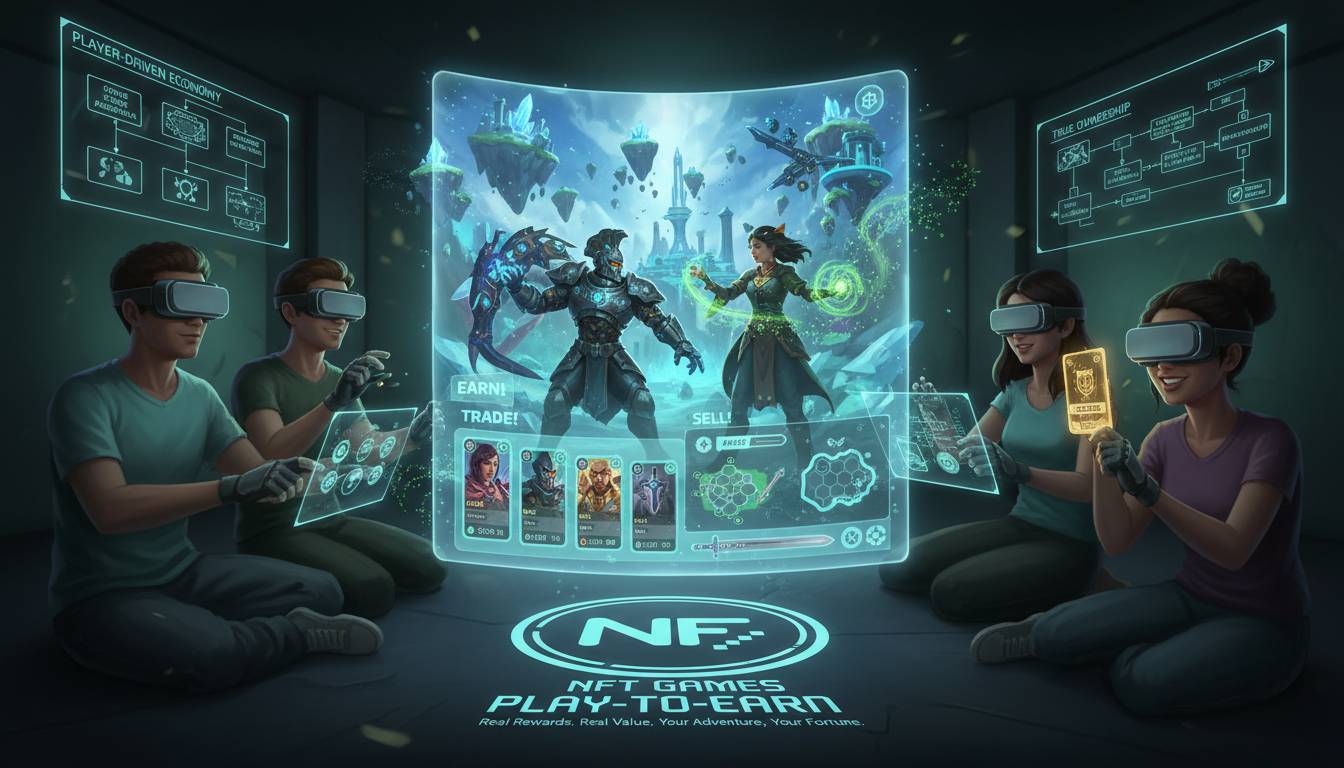
The gaming industry has undergone a massive transformation in recent years, with blockchain technology introducing entirely new ways to play and profit. NFT games represent a revolutionary shift where players can actually own their in-game assets, trade them freely, and earn real-world value through gameplay. Unlike traditional games where all progress and items remain locked within closed systems, play-to-earn NFT games allow users to export their achievements into tangible cryptocurrency rewards.
This comprehensive guide explores the world of NFT gaming, examining how these blockchain-based experiences work, which games are worth exploring, and what critical factors you should consider before investing time and money into this emerging space.
What Are NFT Games and How Do They Work
NFT games are video games built on blockchain technology that incorporate non-fungible tokens (NFTs) as in-game assets. These digital items can range from characters and weapons to virtual land and cosmetic accessories. The fundamental difference from traditional gaming lies in true ownership—players can sell, trade, or transfer theirNFTs to other users without restrictions imposed by game developers.
The play-to-earn model typically operates through two interconnected token systems. The first token serves as the in-game currency used for transactions, purchasing items, and upgrading characters. The second token often functions as a governance token, granting holders voting rights on future game development decisions and occasionally offering profit-sharing mechanisms.
Games like Axie Infinity pioneered this model by rewarding players with Smooth Love Potion (SLP) tokens for completing daily challenges and battles. Players could then sell these tokens on cryptocurrency exchanges for real money, creating income opportunities particularly significant in developing nations where traditional employment options might be limited.
The blockchain infrastructure ensures transparency—the entire transaction history for rare items remains publicly visible, preventing the fraud common in traditional online marketplaces. This verification system builds trust between buyers and sellers, though it also means every purchase and sale becomes part of a permanent public record.
Popular NFT Games Transforming the Industry
Several prominent titles have emerged as leaders in the NFT gaming space, each offering unique gameplay mechanics and earning potential.
Axie Infinity remains one of the most recognizable names in play-to-earn gaming. Players collect, breed, and battle cute creature-like axolotls called Axies. Each Axie is an NFT with unique attributes determining its utility in battles. The game reached massive popularity with over 2 million daily active users at its peak in early 2022, though the token economy has experienced significant volatility since then. Starting to play requires purchasing at least three Axies, creating a substantial initial investment barrier that has drawn criticism from some community members.
The Sandbox offers a voxel-based metaverse where users can create games, own virtual land, and monetize their creations. This metaverse experience allows artists and creators to build custom experiences while retaining ownership through NFT land parcels. The platform’s native SAND token facilitates all transactions within the ecosystem, and numerous major brands including Adidas, Atari, and Snoop Dogg have established virtual presences within The Sandbox.
Decentraland functions as another prominent metaverse option, featuring a fully decentralized virtual world controlled by its users through a decentralized autonomous organization (DAO). Users can purchase LAND parcels and develop experiences ranging from virtual casinos to art galleries. MANA tokens power the economy, and the platform has hosted significant virtual events including concerts and conferences.
Illuvium represents the next generation of NFT gaming, combining open-world exploration with auto-battler mechanics. The game features Illuvials—creatures players capture and battle—which function as NFTs with unique traits and rarity levels. Unlike earlier play-to-earn games criticized for tedious gameplay mechanics, Illuvium emphasizing high-quality graphics and engaging gameplay loops designed to stand as legitimate games first.
StepN introduced the innovative move-to-earn concept, rewarding users for physical activity through GPS-tracked walking and running. Players purchase virtual sneakers as NFTs and earn GST tokens based on distance traveled. The game gained substantial attention during the fitness-crypto crossover trend, though regulatory concerns and sustainability questions soon emerged.
Understanding the Economics and Tokenomics
The economic models sustaining NFT games deserve careful examination before committing any resources. Most play-to-earn games depend on continuous new player investment to sustain token rewards for existing players—a structure resembling a pyramid scheme when sustainable gameplay economics aren’t established.
Every play-to-earn game involves some combination of initial investment costs, ongoing earning potential, and token value fluctuation. Initial costs typically include purchasing NFTs required to start playing, whether characters, land, or equipment. Some games offer rental systems allowing players to borrow assets rather than purchase them, reducing barriers to entry but also reducing potential earnings.
The earning potential varies dramatically between games and depends heavily on token market conditions. Early Axie Infinity players reportedly earned substantial returns, with some making hundreds of dollars daily during the 2021-2022 boom. However, token values have collapsed dramatically for most play-to-earn games—the SLP token dropped over 95% from its peak, dramatically reducing earning potential.
Successful economic participation typically requires understanding several key factors: token emission rates (how many new tokens enter circulation daily), token utility (what the tokens actually enable within the game), and the ratio of new money entering versus leaving the ecosystem. Games with strong utility beyond pure speculation tend to weather market downturns better than those relying solely on token accumulation.
Transaction costs represent another significant consideration. Every NFT purchase, sale, or transfer incurs blockchain fees—commonly called gas fees on networks like Ethereum. These costs can add substantially to entry and exit expenses, particularly during network congestion periods when fees spike unexpectedly.
Risks, Challenges, and Critical Considerations
Investing time and money into NFT games carries substantial risks that potential participants must thoroughly understand before engagement.
Market volatility affects virtually all blockchain gaming investments. The entire cryptocurrency market experienced catastrophic declines throughout 2022, with many gaming tokens losing 80-95% of their value. The collapse of FTX and subsequent market contagion further devastated the sector. Players who invested heavily during the 2021 bull market saw their holdings decimated, with some unable to recover their initial investment regardless of gameplay earnings.
Regulatory uncertainty surrounds the entire NFT gaming industry. Securities regulators worldwide monitor whether game tokens constitute unregistered securities, which could trigger enforcement actions against developers and exchanges. The Securities and Exchange Commission has signaled increasing scrutiny of cryptocurrency products, and several gaming tokens have received Wells notices or been named in investigations. This regulatory cloud creates sustained risk for participants.
Sustainability concerns plague the play-to-earn model. Critics argue that token rewards divorced from real economic productivity eventually collapse as new player acquisition slows. Several high-profile games have seen their economies crumble, leaving longtime players with worthless tokens. The突出问题 often stems from token emission rates exceeding the actual value creation within the ecosystem.
Scams and fraud remain prevalent in the space. Fake NFT games, phishing attacks targeting wallet credentials, and rug-pull schemes where developers abandon projects after collecting investor money occur regularly. Newcomers unfamiliar with blockchain security practices frequently fall victim. Protecting oneself requires hardware wallets, careful verification of all transactions, and skeptical evaluation of any promising returns.
Security vulnerabilities have resulted in massive user losses. Ronin Bridge exploits, Poly Network hacks, and numerous smart contract breaches have collectively stolen billions in user funds. Even legitimate games may contain security flaws exposing users to theft.
How to Get Started Safely
Those interested in exploring NFT gaming should approach with extreme caution and thorough preparation.
Research extensively before committing any funds. Understand the game’s tokenomics, development team credibility, community engagement, and long-term viability indicators. Search for audits of smart contracts and examine whether the game has demonstrated sustainable gameplay rather than purely extractive economics.
Start small with minimal investment levels. Many games offer free-to-earn options or rental systems reducing initial costs. Beginning with expendable funds only—never invest money you cannot afford to lose completely—allows experiencing gameplay without catastrophic financial exposure.
Prioritize security through reputable wallet solutions. Hardware wallets provide the strongest protection against remote theft attempts. Never share seed phrases, verify all transaction details before confirming, and consider using separate wallets dedicated specifically to gaming activities.
Focus on games with genuine gameplay appeal rather than pure earning potential. Games designed primarily around token accumulation often feel like work rather than entertainment, and their economics tend to collapse faster than titles where players genuinely enjoy the experience regardless of earnings.
Understand tax implications. The IRS and other tax authorities increasingly treat cryptocurrency transactions as taxable events. NFT game transactions, token swaps, and conversions to fiat currency may trigger capital gains or income tax obligations.
The Future of NFT Gaming
Despite significant challenges, the underlying technology driving NFT gaming continues evolving with legitimate applications emerging.
Major gaming publishers increasingly explore blockchain integration without the speculative mechanics that plagued early adopters. Ubisoft, Square Enix, and other established developers have announced blockchain initiatives focusing on玩家 true ownership of items purchased through traditional sales rather than play-to-earn token generation.
The convergence of gaming and decentralized finance creates novel opportunities for innovative game design. In-game assets functioning asDeFi collateral, automated market makers facilitating instant trading, and DAO governance structures enabling community-driven development represent technical advances that could reshape gaming economics.
The sector faces continued consolidation as unsustainable projects exit the market while more robustEntry survive. Regulatory clarity, should it emerge, could accelerate institutional investment and mainstream adoption. However, the fundamental question—whether fun gameplay can coexist sustainably with meaningful financial rewards—remains unanswered.
Frequently Asked Questions
Are NFT games actually free to play?
Most NFT games require some initial investment to start playing, typically purchasing character NFTs or other required assets. However, some games offer rental systems or free-to-earn options that reduce upfront costs. The “play-to-earn” model differs from genuinely free gaming because meaningful participation usually requires financial commitment.
Can you actually make money playing NFT games?
Yes, some players have earned substantial money through NFT games, particularly during market boom periods. However, most participants lose money due to token value collapse, scam losses, and unsustainable economic models. Success requires careful research, timing, risk tolerance, and understanding that past performance guarantees nothing about future results.
What is the best NFT game to start with?
The “best” NFT game depends on your priorities—whether gameplay quality, earning potential, low entry cost, or community engagement. Axie Infinity offers established infrastructure but requires significant upfront investment. The Sandbox and Decentraland provide creative metaverse experiences. Newer games like Illuvium emphasize gameplay quality over pure earning mechanics. Research current market conditions before deciding.
Are NFT games legal in the United States?
NFT games operate legally in the United States, though regulatory scrutiny continues increasing. The SEC has expressed concern that some game tokens may constitute unregistered securities. Players should maintain records of all transactions for tax purposes and understand that regulatory changes could affect future participation.
What happens to my NFTs if a game shuts down?
Unlike traditional games where items simply vanish, your NFTs remain in your wallet even if developers discontinue the game. However, if the game shuts down and trading or utility ceases, the NFT essentially becomes worthless—the blockchain record exists but no marketplace or game mechanics support its value. This permanent record represents both the promise and risk of blockchain-based gaming assets.